Imagine waking up on a freezing morning, hopping into your car, and turning the heater on high. You expect a wave of cozy, warm air to toast your fingers. Instead, your vents blast you with an icy breeze that makes you shiver even harder. It is frustrating, uncomfortable, and downright annoying.
When your car heater only blows cold air, it feels like your vehicle is playing a mean trick on you. But do not worry, you do not need to be a professional mechanic to figure out what is wrong. This guide will walk you through exactly how your car warming system works, why it fails, and how you can get that cozy heat back.
The Mystery Behind the Magic Box: How Your Heater Works
Before we dive into fixing the problem, it helps to know how your car actually makes heat. Many people think cars have a tiny furnace or electric heater inside the dashboard, similar to a hair dryer. In reality, your car heater uses recycled engine heat to keep you warm.
When you drive, your engine gets incredibly hot. To keep the engine from melting, a mixture of water and anti-freeze (collectively called engine coolant) flows through the engine block. This liquid absorbs the intense heat.
- The Coolant Journey: The liquid pumps away from the engine, carrying all that heat with it.
- The Divider: Normally, a lot of this heat goes to the radiator at the front of your car to be blown out into the environment.
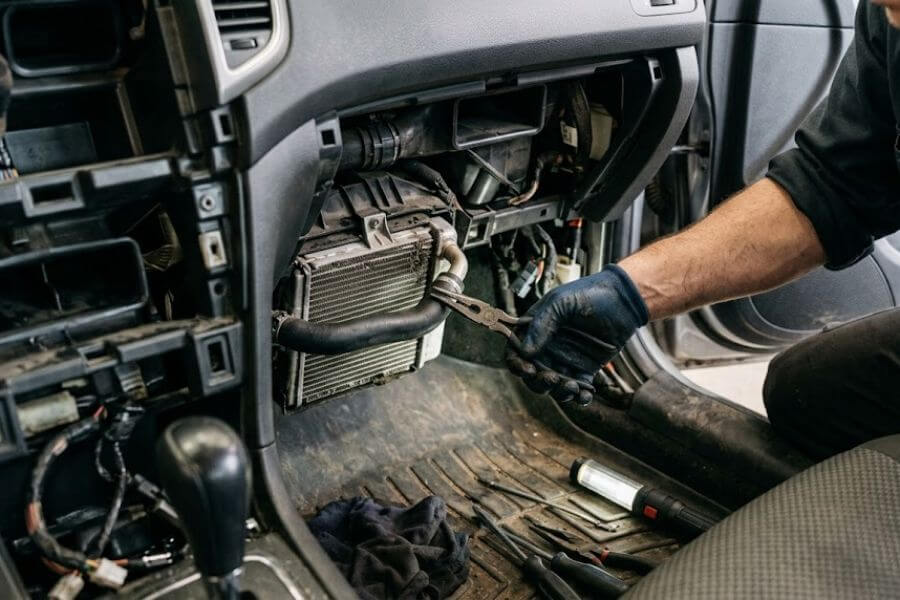
- The Cabin Detour: When you turn your heater on, some of that hot liquid is redirected into a miniature radiator hidden deep inside your dashboard. This mini-radiator is called a heater core.
- The Fan Blast: A small fan, known as a blower motor, forces air across the hot heater core. The air absorbs the heat from the metal fins and shoots out of your dashboard vents, warming your face and toes.
If any single part of this liquid highway or fan setup breaks down, your heat disappears. Let us look at the chief suspects behind your freezing cold vents.
Low Coolant Levels: The Starved System
The absolute most common reason for a chilly cabin is a lack of fluid. If there is not enough liquid running through your engine, the system cannot carry heat over to your dashboard. Think of it like trying to drink a milkshake through a straw when the glass is empty; you will just suck in air.
Why Coolant Drops
Coolant does not just vanish into thin air under normal conditions. If your fluid is low, it usually means you have a leak. It could be a tiny pinhole in a rubber hose, a cracked radiator, or a loose clamp. Sometimes, the liquid can even leak internally into your engine if a seal breaks.
How to Check and Refill Your Liquid
To check this, you must wait until your car is completely cool. Never, ever open a hot radiator cap, because boiling liquid can shoot out and cause severe burns.
- Park on a flat surface and let the engine sit for at least two hours.
- Pop the hood and look for a clear plastic tank filled with colored liquid (usually bright green, orange, or pink). This is your coolant overflow reservoir.
- Look at the lines on the side of the plastic tank. There will be markings for “Full” and “Low.” If the fluid is below the low line, you have found a major clue.
- If the tank is empty, check the actual radiator by carefully twisting off the metal radiator cap. If you cannot see liquid right near the top, you are low.
To fix this temporarily, you can pour a fifty-fifty mix of correct coolant and distilled water directly into the reservoir or radiator until it reaches the proper fill line. Start your car, let it warm up, and see if your heat returns. Keep a close eye on the ground under your car over the next few days to spot any colorful puddles, which point to a persistent leak that needs a permanent patch.
The Sticky Thermostat: Caught in the Cold
Your car engine has a little gatekeeper called a thermostat. This is a small, heat-sensitive valve located where the engine connects to the radiator hoses. Its job is to control the temperature of the engine.
The Open and Close Game
When you first start your car in the morning, the engine is cold. The thermostat stays closed to trap the coolant inside the engine. This allows the engine to heat up quickly to its ideal working temperature. Once the engine gets hot, the thermostat is supposed to spring open, letting the fluid flow to the radiator so the engine does not overheat.
When the Gatekeeper Fails
Thermostats can wear out and get stuck. If a thermostat gets stuck in the open position, the fluid flows constantly through the big radiator at the front of your car. On a chilly day, the rushing wind will keep the fluid so cold that the engine never reaches its normal operating temperature. If the engine stays cold, the liquid heading to your dashboard stays cold, and your vents will only blow a weak, lukewarm breeze.
Spotting a Bad Thermostat
You can diagnose this by looking at the temperature gauge on your dashboard. After driving for fifteen minutes, that little needle should sit right around the middle mark. If the needle stays buried at the bottom near the “C” for cold, your thermostat is likely stuck wide open. Replacing a thermostat is usually a simple, low-cost fix that involves removing a couple of bolts on a metal housing, swapping the old valve for a new one, and tightening it back down.
The Clogged Heater Core: A Blocked Highway
As mentioned earlier, the heater core is the miniature radiator hidden behind your glove box. It is made of a maze of tiny, narrow brass or aluminum tubes. Because these tubes are so small, they are incredibly easy to clog.
How a Clog Happens
Over time, if a car owner neglects to change their engine fluid, old coolant begins to break down. It turns into a thick, muddy sludge or creates crusty rust flakes inside the cooling system. This debris travels through the hoses and jams itself directly into the tiny passages of your heater core.
When the core is blocked, the hot liquid cannot pass through it. The metal fins stay cold, and your dashboard fan just blows regular air across a cold metal block.
Diagnosing the Blockage
You can check for a clogged heater core by looking under the hood near the back of the engine compartment, right where the engine cabin meets the dashboard area. You will see two rubber hoses going directly through the firewall into the interior of the car. One hose carries hot liquid in, and the other carries it back out.
Carefully touch both hoses with your hand after the car has been running for a while.
- If one hose feels scorching hot but the other hose feels lukewarm or cold, you have a blockage. The heat is getting into the core, but it cannot flow through to the other side.
- If both hoses are hot, your heater core is likely clean, and your problem lies elsewhere.
How to Clean It Out
To fix a clogged heater core, you can perform a procedure called a heater core flush. You disconnect both heater hoses under the hood and attach a garden hose to one side. By blasting clean water through the core in the opposite direction of normal flow, you can often push out all the rusty mud and slime. Once the water runs crystal clear, you reconnect the hoses, top off your fluid, and your heat should blast back to life.
Air Pockets: The Trapped Bubbles
Sometimes you have plenty of fluid, your thermostat is working, and your heater core is clear, yet you still get nothing but cold air. This mystery is often caused by trapped air bubbles inside your cooling system.
The Physics of Air in the System
Liquid is great at holding and transferring heat. Air is terrible at it. If you recently drained your fluid, changed a hose, or had a small leak, air can sneak into the system. Because the heater core is often one of the highest points in your car cooling loop, air bubbles naturally rise and get trapped right inside the core.
When a giant air bubble sits in your heater core, it creates a roadblock. The hot liquid cannot push past the bubble, leaving your heater completely dry and cold.
How to Burp Your Car
To fix this, you need to get the air out of the system. Mechanics call this “bleeding” or “burping” the cooling system.
- Make sure the car is completely cold.
- Take the radiator cap off.
- Park the car on a steep incline or use car ramps so the front of the vehicle is higher than the back. This encourages the air bubbles to travel up toward the open radiator neck.
- Turn your dashboard heat settings all the way to high and put the fan on low.
- Start the engine and let it run without the radiator cap on.
- As the engine warms up and the thermostat opens, you will see the liquid begin to move. You will likely see large bubbles pop and splash out of the radiator opening.
- As the bubbles escape, the fluid level will drop. Keep pouring fresh coolant into the radiator to top it off. Once the bubbles stop appearing and the heat inside your cabin feels nice and hot, put the cap back on tightly.
Faulty Blend Doors: The Internal Traffic Controllers
If everything under your hood looks absolutely perfect, your heating issue is likely hidden right inside your dashboard. Your car uses a complex network of plastic ventilation tubes to direct air to your face, your feet, or your windshield. Inside these tubes are small plastic flaps called blend doors.
The Air Traffic Controller
The blend door acts like a traffic cop for air. When you turn your temperature knob to blue (cold), the blend door swings shut to block off the heater core, routing fresh outside air or air conditioner air straight to your vents. When you turn the knob to red (hot), the door swings the other way, forcing the air to travel through the hot heater core before it hits your face.
When the Control System Breaks
In older cars, these doors were controlled by physical metal cables attached directly to your temperature knob. If you turned the knob too hard, the cable could snap or unhook, leaving the door stuck on the cold setting.
In modern vehicles, these doors are moved by tiny electric motors called blend door actuators. These little motors use plastic gears to turn the doors. Over time, the plastic gears can strip, snap, or burn out. If an actuator dies while the blend door is covering the heater core, you will never get warm air, no matter how hot your engine is.
Listening for the Clues
You can often spot a bad blend door actuator by listening closely to your dashboard. Turn your ignition key to the run position but do not start the engine so everything is quiet. Turn your temperature knob back and forth from hot to cold.
If you hear a strange clicking, ticking, or buzzing noise behind your glove box or radio, that means the little electric motor is trying to turn but its plastic gears are broken. Replacing a blend door actuator can sometimes be tricky because they are tucked away in tight spaces, but swapping out the broken motor will instantly restore control over your climate.
The Blower Motor: When Nothing Blows
Sometimes the problem is not that the air is cold, but rather that there is absolutely no air moving at all. If you turn your heater knob to high and you do not hear a fan roaring or feel even a tiny whisper of wind, your blower motor is the prime suspect.
Checking the Electrical Protection
Before buying a new fan motor, always check the simplest cause first: a blown fuse. Your car electrical system uses fuses to protect components from power surges. Locate your car fuse box (usually under the steering wheel or under the hood) and check the diagram for the fuse labeled “Blower,” “Heater,” or “HVAC.” If the tiny metal wire inside the plastic fuse is snapped, replace it with a new fuse of the exact same color and amp rating.
The Fan Resistor Malfunction
Another common issue is a failing blower motor resistor. This is a small electronic part that controls how fast the fan spins. When a resistor starts to fail, you might notice that your fan refuses to work on speeds one, two, or three, but works perfectly when you blast it on speed four (high). If your fan only works on the highest setting, replacing the low-cost resistor behind your glove box will fix the problem.
Summarizing the System Troubles
To help you organize your troubleshooting plan, here is a quick guide summarizing the symptoms, causes, and solutions we have discussed.
| Symptom | Primary Cause | Quick Fix |
| Vents blow cold; temperature gauge stays at the absolute bottom. | Stuck open thermostat. | Replace the thermostat valve. |
| Vents blow cold; engine temperature gauge looks completely normal. | Clogged heater core or broken blend door. | Flush the core with a hose or replace the actuator. |
| Heat works while driving fast, but goes cold when idling at a red light. | Low coolant level or air bubble trapped in system. | Top off the reservoir and bleed the air out. |
| No air comes out of the vents at all, but the dashboard is warm to touch. | Blown fuse, dead fan motor, or bad resistor. | Replace the fuse or swap out the blower motor. |
Step-by-Step Troubleshooting Strategy
When you are ready to tackle this problem, follow this logical order to save time and energy. Always start with the simplest, least expensive checks before tearing things apart or buying brand-new components.
Step 1: Look and Listen
Start your vehicle and let it idle. Look at your dashboard gauges. Is the engine overheating? Is it staying ice-cold? Listen to the dashboard as you flip the switches. Do you hear clicking gears or the sound of a fan spinning? Gathering these sensory clues takes two minutes and narrows down your search immediately.
Step 2: Fluid Assessment
Once the engine is cool, check your fluid levels. If the reservoir tank is completely dry, you know your primary job is to find the leak, refill the system, and burp out the trapped air bubbles.
Step 3: The Hose Test
If your fluid is perfectly full, start the car and let it warm up. Feel the two rubber heater hoses entering the firewall. If one is hot and one is cold, prepare to flush out your heater core. If both are hot, move your attention to the interior dashboard electronics and blend doors.
Long-Term Maintenance: Keeping the Heat Alive
Once you get your heater working perfectly again, you want to make sure it stays that way. The best way to prevent your cabin from turning into an ice box next winter is regular preventative maintenance.
Flush the System Regularly
Do not wait for your heater core to clog up with brown sludge. Check your owner manual to see how often your car needs a cooling system flush. For most vehicles, changing out the fluid every thirty-thousand to fifty-thousand miles keeps the internal passages sparkling clean and prevents rust from eating away at your components.
Inspect Hoses for Softness
Rubber hoses do not last forever. Every time you change your engine oil, take a quick peek under the hood. Give the radiator and heater hoses a gentle squeeze. If they feel extremely soft, mushy, or show visible cracks near the metal clamps, replace them before they burst on the highway and leave you stranded in the cold.
Frequently Asked Questions
Can I drive my car if the heater is blowing cold air?
Yes, you can usually still drive your vehicle if the cabin heater is not working, but you must keep a very close eye on your dashboard temperature gauge. If the heater is cold because your coolant level is extremely low, your engine could quickly overheat. An overheated engine can suffer catastrophic damage, like a warped engine block or a blown head gasket. If the temperature gauge rises into the red zone, pull over safely immediately. If the temperature gauge stays right in the middle, it means your engine is safe, and you are just dealing with a broken blend door or a clogged heater core that will not harm the mechanical health of the engine.
Why does my car heater only blow warm air while I am driving but goes cold when I stop?
This specific pattern is a classic sign of either low fluid levels or a failing water pump. When your vehicle is idling at a red light, the engine spins slowly, which means the water pump spins slowly too. If your fluid is low or the pump is weak, there is not enough pressure to push the hot liquid all the way up into the heater core while idling. When you press the gas pedal and accelerate, the engine spins faster, increasing the pump speed and forcing the hot fluid into the dashboard, which temporarily restores your heat. Top off your fluid reservoir immediately if you notice this happening.
How much does it typically cost to fix a broken car heater?
The cost varies dramatically depending on which specific part failed. If you are dealing with a blown fuse or a low fluid level, the fix can cost just a few dollars. Replacing a broken thermostat or a blower motor resistor generally costs between fifty and two hundred dollars if you do the work yourself. However, if your actual heater core is leaking or completely ruined, the cost can be much higher. Because the heater core is buried deep behind the dashboard structure, a mechanic often has to remove the entire front dashboard assembly, steering column, and radio console just to reach it. This intensive labor can take several hours, pushing professional repair bills higher.
Is it safe to put regular tap water into my radiator to fix a low fluid level?
You should only use regular tap water in an absolute emergency if you are stranded on the side of the road and your engine is overheating. Tap water contains natural minerals like calcium and magnesium. When these minerals are subjected to intense engine heat, they drop out of the liquid and form hard, crusty scale deposits inside your cooling system tubes, which will eventually clog your heater core. Always use a proper fifty-fifty mixture of clean anti-freeze and distilled water. Distilled water has had all minerals completely removed, ensuring your internal cooling highway stays free of crusty buildup.
Why does my heater smell funny when I turn it on?
The type of smell offers a big clue about what is happening under your dashboard. If you smell a sweet, sugary aroma that reminds you of maple syrup, you likely have a leaking heater core. The sweet smell is the scent of hot anti-freeze dripping onto your interior carpets or vaporizing inside your dashboard vents. If you notice a musty, moldy smell like an old basement, your cabin air filter is likely wet and dirty, or your air conditioner drain tube is clogged, allowing stagnant rain water to pool inside your ventilation system. Replacing your cabin air filter will usually eliminate the musty odor.