Picture this: You are sitting in the driver seat, ready to head out for a fun weekend with your friends. You turn the key or push the start button. The engine lets out a loud, healthy roar of spinning metal. It goes chug-a-chug-a-chug with plenty of energy, but it just refuses to catch fire and run. It is a frustrating moment that can make your stomach drop. Your car is teasing you because it feels so close to starting, yet it leaves you completely stranded.
When your vehicle cranks over but will not start, it means your starter motor and your battery are actually doing their jobs perfectly. The muscle is there, but the chemistry and physics needed to create an explosion inside the engine are missing. Instead of panicking or calling an expensive tow truck right away, you can become an automotive detective. Let us dive deep into how your car works, what it needs to run, and how you can figure out exactly what is keeping you parked.
The Secret Recipe Inside Your Engine
Before you can fix a problem, you need to understand how the machine works. Your car engine is essentially a giant air pump that creates power through controlled explosions. To make these explosions happen, the engine requires four specific ingredients at theexact right moment. If even one of these ingredients is missing or incorrect, you will end up sitting in a dead car listening to it crank all day long.
Air to Breathe
Just like human beings, an engine needs oxygen to survive. It sucks in outside air through a front grille, passes it through a filter to remove dirt, and feeds it into the cylinders. Without a constant supply of fresh air, the fuel inside the engine cannot burn.
Fuel to Burn
Gasoline is the food that gives your car its energy. The fuel system must pump gas from your tank, send it through long pipes to the front of the car, and spray it into the engine as a fine mist. If the fuel is missing, or if there is too much of it, the engine will remain silent.
Spark to Ignite
Gasoline and air sitting together in a dark chamber will not do anything on their own. They need a match to light the fire. Your car uses spark plugs to create a tiny bolt of lightning inside the engine. This spark must be incredibly hot and must happen at the exact microsecond the air and fuel are squeezed together.
Compression to Squeeze
An open flame burning in the air does not create much force. To get real power, the engine must trap the air and fuel inside a tight metal room called a cylinder. A heavy metal block called a piston then slams upward, squeezing the mixture into a space as small as a thimble. This squeezing process is called compression. When the spark fires inside that highly squeezed space, it creates a powerful push that drives the car forward.
Safety First in the Driveway
Working on a vehicle can be incredibly exciting, but cars are heavy, hot, and full of moving parts. Before you open the hood, you need to establish a safe work zone so nobody gets hurt.
Park on Flat Ground
Always make sure the vehicle is parked on a flat, level surface like a concrete driveway or a garage floor. If a car is on a hill, it can roll unexpectedly. Turn the vehicle completely off, pull the emergency brake up as hard as you can, and put the transmission into Park. If you have a manual transmission car, put it in first gear and set the handbrake.
Protect Your Body
Engines contain chemicals that can irritate your skin and eyes. Wear a pair of clear safety glasses to protect your eyes from spraying fuel or falling dirt. It is also a smart idea to wear thin, tight-fitting mechanic gloves to keep your hands clean and protect your skin from sharp metal brackets.
Watch Out for Moving Parts
Since your engine can crank over, parts under the hood will spin rapidly when someone turns the key. Keep long hair tied back securely, roll up long sleeves, and remove any loose jewelry or hoodies with hanging strings. A spinning belt can grab loose clothing in the blink of an eye.
Step One: Checking the Battery and Visual Clues
It is time to begin your investigation. The best way to solve a car mystery is to start with the simplest items and work your way toward the complicated stuff. You do not want to take the whole engine apart only to realize you forgot to check something basic.
Listen to the Crank Sound
Pay close attention to the specific sound the engine makes when you turn the key. A normal, healthy crank sounds steady, rhythmic, and strong. It should sound like wuh-wuh-wuh-wuh at a fast pace.
If the engine spins incredibly fast, almost like a sewing machine, it might mean you have a compression problem where the pistons are meeting no resistance. If the engine spins very slowly and sounds tired, your battery might be dying, which means it cannot spin the engine fast enough to create the heat and pressure needed for a start.
Look for Dashboard Warning Lights
Turn your ignition key to the “On” position without cranking the engine. Look closely at the instrument cluster behind your steering wheel. You should see a sea of colorful lights.
Look for a picture of a little yellow engine, which is your Check Engine light. If this light stays on or blinks while you try to start the car, the computer knows exactly what is wrong and has saved an error code in its memory. Also look for a light shaped like a key or a padlock. If that light is flashing, your car security system might think you are a thief and it has shut down the engine on purpose.
Search for Puddles and Smells
Step outside the car and walk around it. Look underneath the engine bay and the fuel tank at the back of the vehicle. Do you see any large puddles of fluid? A puddle of green, blue, or pink fluid means an engine coolant leak. A puddle of dark brown or black fluid means an oil leak.
Most importantly, sniff the air. If you smell strong, fresh gasoline outside the car, you might have a broken fuel line under the hood, which is a major fire hazard. If you smell rotten eggs, your exhaust system might be completely plugged up.
Step Two: Exploring the Fuel System
If the battery sounds strong and there are no scary puddles on the ground, the fuel system is the most common culprit when a car will not start. If the engine cannot get its juice, it will never wake up.
The Fuel Gauge Trap
Look closely at your dashboard fuel gauge. Does it say you have gas? Keep in mind that fuel gauges can break. The floating mechanism inside your gas tank can get stuck, showing you that you have a quarter-tank of gas when you are actually completely bone-dry.
Think back to the last time you filled up. If it has been weeks, or if you know you like to drive with the low fuel light on, go ahead and add a gallon of fresh gasoline from a portable container just to be absolutely sure.
Listening for the Fuel Pump Hum
When you turn your car key to the “On” position right before the engine cranks, a little electric pump inside your gas tank wakes up. It spins for two seconds to push fuel up to the engine so it is ready to start.
To check this, roll down your windows and turn off the radio, fans, and A/C. Turn the key to the “On” position and listen very carefully toward the back seat of the car. You should hear a faint, high-pitched whir or hum sound for just a moment. If you hear absolutely nothing but dead silence, your fuel pump might be broken, or the electrical switch that powers it might be dead.
The Fuel Pump Relay and Fuse Test
If you did not hear the fuel pump hum, do not panic and buy an expensive new pump yet. Open the plastic fuse box under your hood or beneath the dashboard. Look at the map printed on the plastic lid to find the fuse labeled “Fuel Pump” or “Fuel Injection.”
Pull that fuse out using a small plastic pair of tweezers and hold it up to the light. Look for a tiny metal wire inside the clear plastic. If that wire is broken or melted, the fuse is blown, cutting off all electricity to the pump. You can replace it with a fresh fuse of the exact same color and number to see if your car springs back to life.
Testing with Starting Fluid
There is a classic trick to find out instantly if your engine is suffering from a lack of fuel. You can buy a can of aerosol starting fluid from any local auto parts shop. This spray is essentially super-flammable artificial fuel in a can.
Find the large black plastic tube that brings fresh air into your engine. Undo the metal clamp holding it in place and pull the hose back to reveal the silver metal throat of the engine, which is called the throttle body. Have a helper sit in the driver seat. Spray a brief two-second blast of starting fluid directly into that metal opening, and immediately tell your helper to crank the engine.
| Starting Fluid Test Result | What It Means | Next Diagnostic Steps |
| Engine starts, runs for two seconds, then dies | The spark, compression, and air are perfect. The engine is starving for gasoline. | Check fuel pump, fuel filter, and fuel injectors. |
| Engine keeps cranking without making any new noises | The issue is not a lack of fuel. The problem lies elsewhere. | Move on to checking for spark and compression. |
Step Three: Testing for Spark
If your engine refuses to start even when you spray starting fluid into its throat, you know that fuel is probably not the main problem. Now it is time to look at the electrical side of the house and see if your spark plugs are actually throwing fire.
How Spark Plugs Work
Inside your engine, electricity travels down heavy insulated wires or individual plastic towers called ignition coils. This electricity reaches the spark plug, travels down a ceramic core, and jumps across a tiny air gap at the tip. This jump creates a bright blue spark that sets the fuel on fire. If the spark plugs are old, dirty, or wet with oil, that electricity cannot jump the gap.
The Spark Plug Inspection
To check the condition of your plugs, you will need a special deep socket wrench tool. Carefully disconnect the wire or the plastic coil from the top of one spark plug. Use your wrench to unscrew the spark plug from the engine block.
Look closely at the firing tip of the plug. It should look clean, dry, and a light tan or grey color. If the tip is coated in thick black soot, your engine is running too rich, meaning it has too much fuel. If the tip is soaking wet with wet gasoline, the engine has flooded, meaning the cylinders are drowning in gas and the spark cannot catch. If it is covered in thick brown engine oil, you have a leaking seal deep inside the engine.
Using an Inline Spark Tester
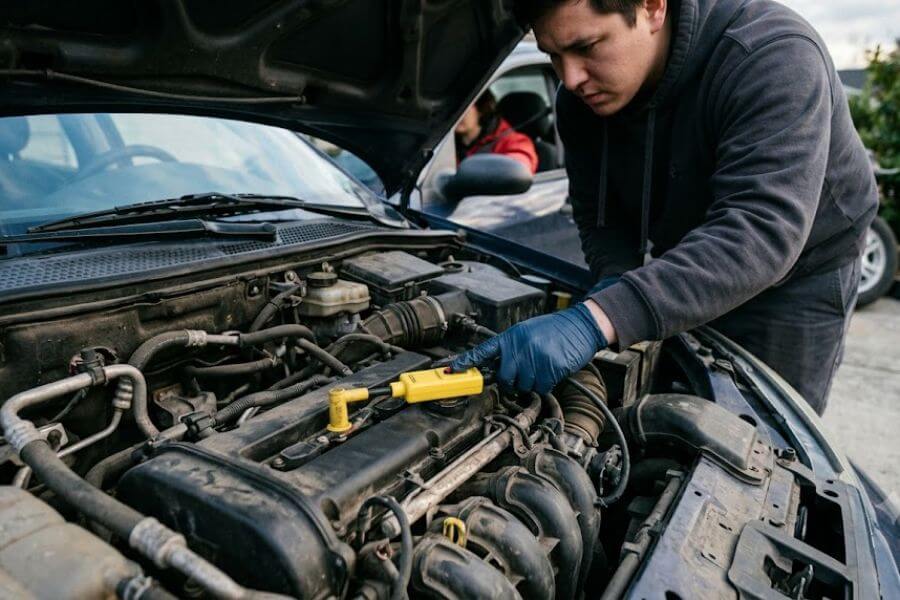
The safest and easiest way to see if electricity is flowing is to use a cheap tool called an inline spark tester. This tool looks like a clear plastic light bulb with wires on both ends.
Connect one end of the tester to your spark plug wire or ignition coil, and clip the other end to a clean, unpainted metal bolt on the engine block. Have your helper crank the engine while you look closely at the clear plastic bulb. If the tool flashes with a bright, steady rhythm, your ignition system is successfully sending electricity down the line. If it stays dark, you have an electrical breakdown.
The Crankshaft Position Sensor Clue
Your car engine relies on a tiny electronic eye called a crankshaft position sensor. This sensor watches the heavy spinning parts inside the engine and tells the computer exactly when to fire the spark plugs. If this little sensor dies, the computer becomes completely blind. It will not know when to fire the sparks, so it shuts down the entire ignition system. A broken crankshaft sensor will often cause a car to suddenly die while driving and then refuse to restart, even though it cranks perfectly.
Step Four: Inspecting the Air Delivery System
An engine needs to draw in a massive amount of clean air to keep running. If the airways are choked off, the engine will suffocate just like a person would.
The Clogged Air Filter Check
Pop open the large plastic box connected to the engine air tubes. Inside, you will find a paper or fabric air filter designed to catch dust, leaves, and bugs. Take the filter out and hold it up toward the sun. Can you see light passing through the paper pleats?
If the filter is completely black, packed with mud, or filled with a nest built by a mouse while the car was parked overnight, it can block air from entering the engine. Try cranking the engine briefly with the filter completely removed from the box. If it starts up, you just need to buy a clean filter.
Searching for a Vacuum Leak
Your engine operates like a vacuum cleaner, sucking air through sealed tubes. If an extra hole opens up in those tubes, unmetered air rushes in, destroying the delicate balance of the fuel mixture.
Inspect every inch of the black rubber hoses running around your engine. Look for dry, cracked areas, splits near the metal clamps, or hoses that have popped off their plastic nozzles. A large rip in a rubber air intake hose will let too much air in, causing the engine to crank over without ever starting up because the mix is too lean.
The Throttle Body Flap
The throttle body is the gatekeeper of your engine. When you press the gas pedal, a metal flap inside this throat opens up to let air rush in. Over time, sticky black carbon goo can build up around the edges of this metal flap, gluing it completely shut.
With the air tube removed, look inside the throttle body with a flashlight. Have a friend press the gas pedal down to see if the flap moves smoothly. If it is stuck or covered in black tar, you can use a rag and some spray cleaner to scrub it clean until the shiny silver metal shows through.
Step Five: Measuring Compression
If your car has air, fuel, and a bright spark, but still refuses to run, you are dealing with a mechanical breakdown inside the core of the engine. This usually means the engine can no longer squeeze the air and fuel tightly enough to create an explosion.
The Squeezing Process
Inside the engine, a ring around the piston forms a perfect seal against the cylinder wall. As the piston drives upward, it traps the air and fuel. If the piston rings wear out, or if the metal valves at the top of the room do not close completely, the air escapes out the sides instead of getting squeezed. This results in zero power.
Signs of Low Compression
You can often identify a compression problem just by using your ears. When you crank an engine with healthy compression, you will hear a distinct pulsing rhythm: chug-wuh-chug-wuh-chug. This happens because the starter motor has to work extra hard to push the piston against the trapped air pressure.
If your engine has lost compression across all its cylinders, the starter motor encounters no resistance. The engine will spin incredibly fast and smooth, making a flat, continuous whirrrrrrr sound without any rhythmic pulses at all.
The Broken Timing Belt Catastrophe
The most common cause of sudden, total compression loss is a broken timing belt or timing chain. This belt is a thick rubber band with teeth on it that connects the top half of the engine to the bottom half. It ensures that the valves open and close at the exact right moment relative to the pistons.
If this belt snaps while you are driving, the top half of the engine stops moving entirely while the bottom half keeps spinning. The valves stay open, the air escapes instantly, and the engine will crank with a fast, hollow sound. On many modern cars, a snapped timing belt can cause the pistons to slam into the open valves, causing catastrophic internal damage that requires a brand new engine.
Step Six: Outsmarting the Electronic Brain
Modern cars are essentially rolling computers. There are dozens of electronic modules and sensors that control how your car drives, and a glitch in the software can easily leave you stranded.
The Security Anti-Theft Glitch
Your car key has a tiny electronic chip hidden inside the plastic handle. When you slide the key into the ignition, an antenna behind the dashboard sends out a radio wave to read the chip. If the chip matches the car code, the engine starts.
If your key chip breaks, or if the car computer forgets the code, the security system enters lockdown mode. It will allow the starter motor to crank the engine so you can steer the car if you are in danger, but it cuts off the electricity to the fuel injectors. If you suspect this, try using your spare valet key to see if the car recognizes it instead.
Resetting the Computer Network
Sometimes, the computers inside your car can experience a software freeze, just like a smartphone or a laptop. When this happens, the modules stop talking to each other across the network.
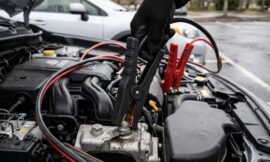
You can perform a hard reset by opening the hood and using a wrench to disconnect the black negative cable from your car battery terminal. Leave it disconnected for ten full minutes. This drains all residual power from the internal capacitors, wiping out temporary memory glitches. Reconnect the cable tightly and try starting the car again.
Checking for a Tripped Inertia Switch
Many older cars feature a safety device called an inertia switch or a crash sensor. This is a small mechanical ball held by a magnet. If you hit a massive pothole, bump into a curb too hard, or get into a minor fender-bender, the jolt can cause the ball to pop free.
When the ball moves, it instantly cuts off all electricity to the fuel pump to prevent a fire. Look up your vehicle manual to find out where this switch is located, which is usually in the trunk or under the passenger side dashboard. If the button on top has popped up, simply press it back down with your finger to reset it.
Organizing Your Diagnostic Path
To keep your thoughts organized while working in the driveway, it helps to follow a structured checklist. You can think of it as a troubleshooting ladder where you verify each system before moving to the next.
[Is Battery Strong?] --> No --> Charge or Jump Battery
        |
       Yes
        v
[Is Fuel Pump Hum Present?] --> No --> Check Fuses and Relays
        |
       Yes
        v
[Does Starting Fluid Work?] --> Yes --> Fuel Supply Issue (Filter/Pump)
        |
       No
        v
[Is Bright Spark Present?] --> No --> Check Coils, Plugs, Crank Sensor
        |
       Yes
        v
[Does Engine Sound Rhythmic?] --> No --> Timing Belt or Valve Issue
By systematically crossing off these possibilities, you can avoid guessing or spending money on random replacement parts that you do not actually need.
Frequently Asked Questions
Why does my engine crank perfectly fine but fail to catch fire and start up?
When an engine cranks over, it proves that your battery, starter motor, and key ignition switch are doing their jobs. The problem is that the engine is missing one of the primary ingredients needed to create combustion inside the cylinders. This is almost always caused by a lack of fuel delivery, a missing electrical spark at the plugs, an engine airway blockage, or a mechanical timing failure that prevents compression.
Can a completely dead alternator cause my car to crank over but not start?
No, a bad alternator will not cause a car to crank but fail to start. The alternator is only responsible for charging the battery while the engine is already running. If your alternator dies while you are driving, the car will eventually drain the battery completely down to zero. When you try to start a car with a dead battery, the engine will not crank over at all. It will just make a rapid clicking noise or remain completely silent.
How can I tell if my fuel pump has gone bad without using special garage tools?
The easiest way to check your fuel pump is by listening for its operating sound. Go to a quiet area, turn off all your car electronics, and turn the key to the “On” position without cranking. Listen for a short two-second humming sound coming from beneath the rear seat or gas tank area. If you hear absolutely nothing, and your fuel pump fuses are intact, your pump is likely dead or disconnected.
What is an engine flood and how do I fix it if it happens to my car?
An engine becomes flooded when too much liquid gasoline enters the cylinders, soaking the spark plugs and preventing them from creating a spark. This often happens if you repeatedly pump the gas pedal or try to start the car multiple times in extreme cold weather. To fix a flooded engine on modern fuel-injected cars, press the gas pedal all the way down to the floor mat and hold it there while you crank the engine for five seconds. This tells the car computer to shut off the fuel injectors completely so fresh air can dry out the wet spark plugs.
Why does my car crank but refuse to start only when the weather outside is very wet or rainy?
When a car refuses to start only on damp, rainy days, it usually points to an issue with worn-out ignition parts. Over time, spark plug wires and ignition coils can develop microscopic cracks in their plastic insulation. When the air is highly humid or wet, moisture seeps into these tiny cracks. Electricity loves water, so the spark shorts out against the metal engine block instead of traveling down to the tip of the spark plug.
Could a bad sensor really prevent my entire engine from running?
Yes, absolutely. Modern engines rely heavily on the crankshaft position sensor and the camshaft position sensor to coordinate their timing. If the crankshaft sensor fails, the computer loses track of where the pistons are inside the dark engine block. To protect the engine from firing at the wrong time and breaking itself apart, the computer will deliberately shut off all spark and fuel delivery, leaving you with an engine that cranks endlessly without ever starting.