You turn the key. Instead of a healthy, roaring engine, you get a clicking sound and a dashboard that goes completely dark. Your stomach drops. You are officially stranded, and your car is refusing to cooperate.
When your vehicle will not start, two major parts are usually at the top of the suspect list: the battery and the alternator. Both are absolutely critical to keeping your ride moving, but they play completely different roles under the hood. Misdiagnosing the problem can lead to wasting money on a brand-new battery when your true issue is a worn-out alternator, or vice versa.
Testing these parts at home is straightforward, and you do not need to be a professional mechanic to figure out exactly what is going wrong. Let us dive into how your electrical system works, how to spot the warning signs, and how to test both parts like a pro so you can get back on the road.
Understanding the Electrical Dynamic Duo
To solve the mystery under your hood, you first need to understand how these two parts work together. Think of them as a team where one passes the torch to the other.
What Your Battery Does
Your car battery has one primary job: to provide the massive surge of electricity needed to start your engine. When you turn your key or push the start button, the battery sends power to the starter motor, which turns the engine over. It also powers electrical components like the lights and radio when the engine is completely turned off. However, the battery only holds a limited amount of energy. If it had to power everything while you drove, it would die within a matter of minutes.
What Your Alternator Does
Once your engine is running, the alternator takes over the heavy lifting. The alternator is a small generator driven by your engine’s accessory belt. It converts the mechanical energy of the spinning engine into electrical energy. This electricity powers your headlights, air conditioning, radio, and power windows while you drive. Crucially, the alternator also sends power back into the battery, recharging it so that it has plenty of energy to start the engine the next time you get in.
The Cycle of Power
Without the battery, you cannot start the vehicle. Without the alternator, your battery cannot recharge, and your car will quickly stall out after starting. When one part fails, it often mimics the symptoms of the other, which is why proper testing is so important.
Warning Signs Your Battery is Dying
Batteries do not always quit without warning. They usually drop hints that their lifespan is coming to an end. Most car batteries last between three and five years, so if yours is getting old, keep a sharp eye out for these specific red flags.
The Slow Engine Crank
When you try to start your vehicle, does the engine sound sluggish? If it makes a long, strained “whine-whine-whine” sound before finally kicking over, your battery is likely struggling to hold a sufficient charge. This is often the very first sign of a failing battery.
Clicking Sounds When Turning the Key
If you turn the key and hear a rapid-fire clicking sound but the engine does not spin at all, your battery is almost completely drained. The battery has just enough juice to trigger the starter relay, which makes the clicking sound, but not enough power to actually turn the heavy engine components.
Dim Cabin Lights and Headlights Before Starting
Pay attention to how your lights behave before you crank the engine. If you switch on your headlights or dome lights while the engine is off and they look weak or yellow, your battery is low on power. If those lights suddenly get much brighter the moment the engine starts, that tells you the battery was weak, but your alternator is doing its job to boost the voltage.
The Rotten Egg Smell
Have you noticed a strange, sulfur-like smell wafting from under your hood? When a lead-acid car battery is overcharged or suffers internal damage, it can boil its liquid electrolyte solution, releasing hydrogen sulfide gas. This gas smells exactly like rotten eggs. If you smell this, your battery is likely damaged and needs immediate replacement.
A Swollen or Bloated Battery Case
Pop your hood and take a close look at the plastic box housing your battery. If the flat sides look bloated, swollen, or misshapen, extreme heat or internal failure has caused the structure to deform. A bloated battery is a ticking time bomb and should be handled with extreme care and replaced immediately.
Warning Signs Your Alternator is Failing
Because the alternator powers your vehicle while you drive, its symptoms usually show up while the car is actively running. If your alternator is on its deathbed, your vehicle will struggle to maintain its electrical balance.
Dimming or Overly Bright Lights While Driving
Since the alternator regulates the electrical flow to your vehicle, a failing internal voltage regulator can cause your lights to behave erratically. You might notice your headlights getting unusually dim when you idle at a red light, only to get bright again when you step on the gas pedal. Alternatively, your lights might look blindingly bright, which is a sign the alternator is pushing out too much unregulated voltage.
A Dead Battery That Will Not Stay Charged
If you jump-start your vehicle, take it for a long drive, and then find that it will not restart after you turn it off, your alternator might be the culprit. A healthy alternator should fully recharge your battery during a twenty-minute drive. If it fails to do so, your battery is left completely empty.
Electrical Glitches and Ghostly Behavior
Modern vehicles rely heavily on computers and electrical modules. When an alternator begins to fail, the voltage in the vehicle drops below optimal levels. This causes the car’s computers to behave erratically. Your power windows might roll up incredibly slowly, your radio might suddenly turn off by itself, your heated seats might refuse to warm up, or your dashboard needles might start twitching wildly.
Growling, Whining, or Squealing Noises
Your alternator relies on internal bearings to spin smoothly at thousands of revolutions per minute. Over time, these bearings can wear down, leading to a loud, low-pitched growling or whining noise that changes in pitch as you press the gas pedal. Additionally, if the alternator pulley is misaligned or the accessory belt is slipping, you might hear a sharp, high-pitched squealing sound from the front of the engine.
The Battery Warning Light on the Dash
Most people assume that the dashboard warning light shaped like a little car battery means their battery is dead. In reality, that light indicates a general system voltage failure. If that light pops up while you are driving, it almost always means your alternator has stopped producing enough electricity to keep the vehicle running and charge the battery.
The Simple Headlight Test
If you do not have any special tools on hand, you can perform a quick, preliminary test using nothing but your garage door and your vehicle’s headlights. This old-school trick is a great way to get an immediate clue about which part is causing your headaches.
How to Perform the Test
First, park your vehicle facing a flat wall or your closed garage door at night or in a shaded area. Turn the engine completely off. Next, switch your headlights on. Look at the beam of light on the wall and note how bright it is.
Now, start your engine while keeping your eyes glued to the headlight beams on the wall. Pay close attention to how the light changes during and after the engine starts.
Analyzing the Results
If the headlights dim significantly while the engine is cranking and stay dim or yellow once the engine is idling, your battery is likely weak, and your alternator might not be providing enough power to lift the system voltage.
If the headlights dim briefly while the engine cranks, but then instantly become noticeably brighter once the engine runs, your alternator is working properly. It is actively stepping in to supply power and recharge the battery.
If the headlights stay dim even when you rev the engine while parked, your alternator is likely failing to produce enough electrical output to meet the vehicle’s demands.
How to Test Your Battery and Alternator with a Multimeter
To get an exact, foolproof answer, you need to use a digital multimeter. This is a small, inexpensive tool that measures electrical voltage. It provides clear, mathematical proof of whether your components are healthy or dying.
Setting Up Your Multimeter
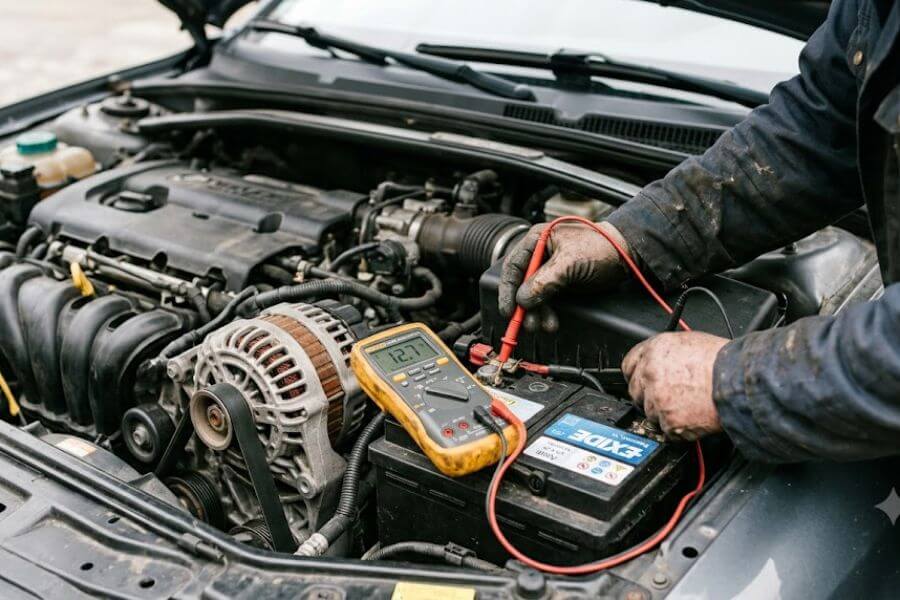
Before you touch your vehicle, look at the front dial of your multimeter. You want to measure direct current voltage. Turn the dial to the DC voltage setting, which is usually represented by a capital letter V with a straight line or a dotted line above it. Set the range to twenty volts. Plug the black test lead into the common port and the red test lead into the voltage port.
Testing the Battery with the Engine Off
Make sure your vehicle has been turned off for at least an hour so you get a true reading of the battery’s resting voltage. Open your hood and locate your battery. Clean off any white, powdery corrosion from the terminals using a wire brush if necessary.
Touch the red multimeter probe to the positive terminal of the battery, which is marked with a plus sign and usually has a red cap. Touch the black multimeter probe to the negative terminal, which is marked with a minus sign and usually has a black wire connected to it. Read the number on the digital screen.
Interpreting Your Stationary Battery Readings
A fully charged, healthy car battery should read between 12.6 and 12.8 volts when the engine is off. Every small fraction of a volt matters here. If your battery reads 12.2 volts, it is actually half-discharged. If it reads 12.0 volts or lower, it is completely discharged and needs to be charged before you can test its overall health accurately.
The Crank Test
Leave your multimeter connected to the battery terminals and have a friend sit in the driver’s seat. Ask your friend to start the engine while you watch the screen of the multimeter closely. Watch how low the voltage drops the exact moment the starter motor engages.
In a healthy system, the voltage should not drop below 9.6 volts during the crank. If the voltage plunges down to seven or eight volts while the engine is turning over, the battery lacks the internal strength to hold up under a heavy load, meaning it needs to be replaced.
Testing the Alternator with the Engine Running
Once the engine successfully starts and settles into a smooth idle, look at your multimeter screen again while the probes are still connected to the battery terminals. Because the engine is running, you are no longer measuring just the battery. You are now measuring the electrical output that the alternator is sending to the battery.
Interpreting Your Running Alternator Readings
A healthy alternator should pump out between 13.5 and 14.7 volts while the engine is idling. This higher voltage is necessary to push energy back into the twelve-volt battery.
If your reading stays low, around 12.0 to 12.5 volts, or if it keeps dropping lower and lower while the engine runs, your alternator is not generating electricity. Your car is running entirely on the battery’s stored energy, and it will die as soon as that energy runs out.
The Alternator Load Test
To make absolutely sure your alternator can handle real-world driving conditions, you need to test it under a heavy electrical load. While the engine is still idling, turn on every electrical accessory you can think of. Switch the headlights to high beams, turn the climate control fan to its maximum speed, turn on the rear window defroster, and turn on the windshield wipers.
Look at your multimeter screen. The extra demand will cause the voltage to dip momentarily, but a healthy alternator should quickly recover and maintain a reading of at least 13.0 to 13.5 volts even under full load. If the voltage drops down into the twelve-volt range and stays there, your alternator is weak and cannot keep up with your vehicle’s needs during daily driving.
Summary Comparison Table
To help you quickly visualize the differences between a battery issue and an alternator issue, use this quick reference table to check your symptoms and measurements.
| Diagnostic Factor | Healthy System Status | Failing Battery Symptoms | Failing Alternator Symptoms |
| Engine Crank Sound | Crisp, fast, and immediate | Slow, dragging, or clicking | Normal at first, then slow or dead |
| Dashboard Lights | Bright and stable | Dim before starting engine | Dim or flickering while driving |
| Resting Voltage (Engine Off) | 12.6V to 12.8V | Below 12.0V | Often low because it never recharged |
| Cranking Voltage (Starting) | Above 9.6V | Drops below 9.0V drastically | Varies based on battery condition |
| Running Voltage (Engine On) | 13.5V to 14.7V | Normal reading after starting | Drops below 13.0V or keeps falling |
| Behavior Under Load | Stays above 13.0V | Normal reading | Plummets down into the 12.0V range |
Troubleshooting a Parasitic Draw
Sometimes, you might test your battery and alternator only to find that both parts pass with flying colors. Yet, every single morning, you walk out to find your vehicle completely dead. When this happens, you are likely dealing with a hidden issue known as a parasitic draw.
What is a Parasitic Draw?
When you turn off your vehicle and lock the doors, its computers slowly go to sleep over the course of about thirty minutes. A tiny amount of electricity is always drawn to keep your clock settings and keyless entry systems active. However, if a glove-box light stays stuck on, a relay gets frozen in the closed position, or an aftermarket radio is wired incorrectly, those components will continue to pull a massive amount of power overnight, completely draining a perfectly good battery.
Finding the Leak
To find a parasitic draw, you can use your multimeter configured to measure current in amperes rather than voltage. You disconnect the negative battery cable and connect the multimeter in series between the negative battery terminal and the loose cable end.
With the vehicle off and all doors closed, a normal reading should be below fifty milliamperes. If you see a draw of several hundred milliamperes or multiple amperes, something is staying awake. You can then pull individual fuses from the fuse box one by one while watching the meter. When the amperage reading suddenly drops to normal, you have successfully isolated the exact circuit that is stealing your power.
Keeping Your Electrical System Healthy
Preventative care can stop you from getting stranded in the first place. By taking a few minutes every few months to check on your electrical system, you can extend the lifespan of both your battery and your alternator.
Clean Your Battery Terminals Regularly
The white or bluish-green crust that forms around your battery terminals is lead sulfate or copper sulfate. This corrosion acts as an insulator, blocking the flow of electricity between your battery cables and the battery posts. This makes your starter work harder and prevents your alternator from fully recharging the battery. Clean it off using a simple mixture of baking soda and water combined with a stiff wire brush, then apply a thin layer of petroleum jelly to prevent future buildup.
Check the Accessory Belt Tension
Your alternator cannot generate electricity if its drive belt is slipping. Inspect the serpentine belt that runs along the front of your engine. Look for cracks, fraying edges, or shiny, glazed spots on the underside of the belt. Press down on the longest open stretch of the belt to ensure it feels tight. If the belt is loose or worn out, replace it immediately to keep your alternator spinning at full speed.
Turn Off Accessories Before Shutting Down
Get into the habit of turning off your headlights, air conditioning, and heavy aftermarket stereo systems before you turn off your engine. This ensures that the next time you start your vehicle, the battery can focus every ounce of its energy entirely on turning over the starter motor, rather than trying to power accessories at the exact same time.
Frequently Asked Questions
Can a bad alternator destroy a brand-new car battery?
Yes, a failing alternator can quickly ruin a brand-new battery. If the alternator’s internal voltage regulator fails, it can pump an uncontrolled, excessively high voltage into the battery, causing the internal chemical fluid to boil away and warp the lead plates. Alternatively, if the alternator stops charging entirely, your battery will be drained down to zero over and over again. Constantly deep-discharging a standard starting battery causes rapid sulfation, which destroys its capacity to hold a charge in the future.
How long can I drive a vehicle with a failing alternator?
You should not try to drive a vehicle with a bad alternator for more than a few minutes. Once the alternator stops generating power, your vehicle runs completely on the limited electricity stored within the battery. Depending on how much power your fuel pump, engine computers, and ignition system consume, your car will generally stall out within five to thirty minutes. Driving with a dead alternator is highly dangerous, as your vehicle could lose power steering, headlights, and engine power completely while you are moving in heavy traffic.
Why does my battery die so quickly in extremely cold weather?
Cold weather slows down the internal chemical reactions that allow a car battery to produce electrical energy. At freezing temperatures, a battery loses roughly twenty percent to thirty percent of its maximum cranking power. At the exact same time, the cold weather causes the motor oil inside your engine to become thick and syrupy, making the engine much harder to turn over. This combination of reduced battery power and increased engine resistance is why weak batteries almost always fail completely during the first cold snap of winter.
Can I jump-start a car that has a completely failed alternator?
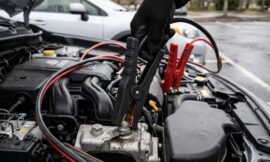
You can jump-start the vehicle to get it running, but it will likely stall out the very moment you remove the jumper cables from the donor vehicle. Jumper cables provide the electricity needed to crank the starter motor, but once those cables are disconnected, your vehicle must rely on its own alternator to keep the spark plugs firing and the fuel pump running. If your alternator is completely dead, the engine will quickly choke out as soon as the helper car detaches its cables.
Is it safe to disconnect the negative battery cable while the engine is running to test the alternator?
No, you should never perform this old-school test on a modern vehicle. Decades ago, mechanics would pull the negative cable off while the engine was running; if the car stayed running, they knew the alternator was working. However, modern vehicles are packed with sensitive computers, sensors, and electronic modules. Disconnecting the battery while the alternator is actively spinning can cause a massive electrical voltage spike that can instantly fry thousands of dollars worth of electronic components throughout your entire vehicle. Always use a digital multimeter instead.