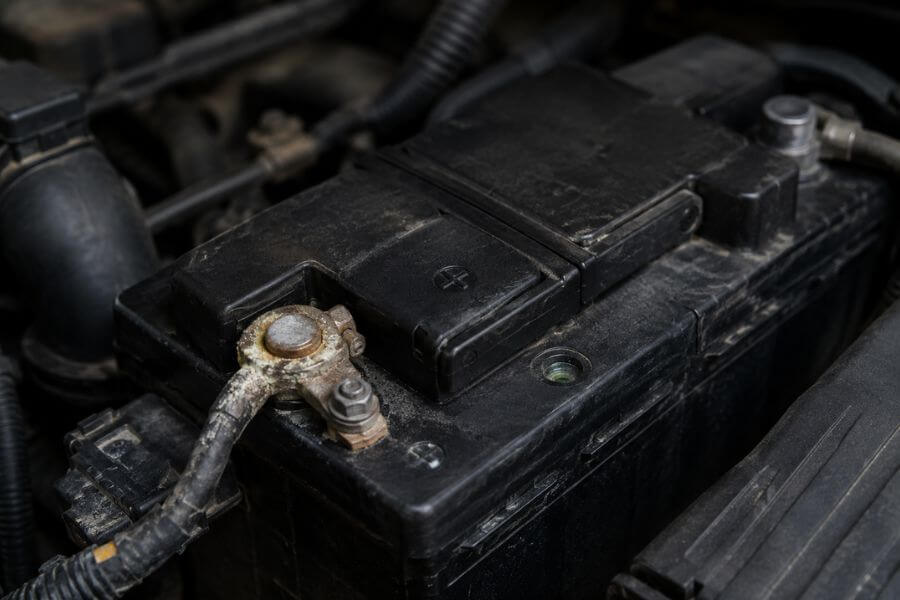
Your car battery is one of the most important parts of your vehicle, yet it is often overlooked until something goes wrong. A healthy battery powers your engine’s starting system, electronics, lights, and many other essential components. When a battery begins to fail, it usually gives warning signs before it dies completely.
Recognizing these signs early can help you avoid getting stranded in a parking lot, missing work, or paying for an emergency tow truck. In this guide, you’ll learn the six biggest signs that your car battery is nearing the end of its life and what you can do before it fails entirely.
Quick Summary Table 🚗
| Warning Sign | What It Means | Urgency Level |
|---|---|---|
| Slow engine crank | Battery is losing power capacity | High |
| Dim headlights and electrical issues | Battery cannot provide enough voltage | High |
| Battery warning light appears | Charging system may be failing | High |
| Frequent jump starts needed | Battery cannot hold a charge | Very High |
| Swollen or damaged battery case | Internal battery damage | Very High |
| Old battery age | Battery is reaching expected lifespan | Medium to High |
How We Ranked These Signs 🔋
We ranked these warning signs based on the factors below:
- How commonly the symptom appears before battery failure
- How accurately the sign predicts a dead battery
- Potential risk of being stranded
- Cost implications if ignored
- Impact on vehicle reliability
- Ease of identifying the warning sign
- Likelihood that immediate action is required
1. Slow Engine Crank When Starting the Car 🛠️
One of the earliest and most noticeable signs of a dying battery is a slow engine crank.
Normally, when you turn the key or press the start button, your engine should start quickly. If the battery is weakening, the starter motor may turn the engine over more slowly than usual. You might hear a sluggish “rrr-rrr-rrr” sound before the engine finally starts.
This happens because the battery no longer has enough power to provide a strong electrical current to the starter motor.
Common situations where you’ll notice this include:
- Cold mornings
- After the car has been parked overnight
- During rainy or winter weather
- After leaving accessories running
Many drivers ignore slow cranking because the vehicle still starts. However, this symptom often appears weeks or even months before complete battery failure.
If your engine consistently struggles to start, it’s a good idea to have the battery tested as soon as possible.
2. Dim Headlights and Weak Electrical Components 💡
Modern vehicles rely heavily on electrical systems. As a battery weakens, you may notice several electrical problems.
Your headlights might appear dimmer than normal, especially when the engine is off. Interior lights may flicker, dashboard displays could appear weaker, and power windows may move more slowly.
Other warning signs include:
- Radio randomly shutting off
- Infotainment system glitches
- Weak air conditioning fan speed
- Delayed power seat movement
- Flickering dashboard lights
Since the battery supplies power to these systems, reduced battery performance often shows up here before the battery completely fails.
If multiple electrical components begin acting strangely at the same time, don’t assume it’s just a coincidence. The battery may be struggling to meet the vehicle’s power demands.
3. Battery Warning Light on the Dashboard 🚨
Most vehicles have a battery-shaped warning light on the dashboard.
When this light appears, many people assume the battery itself is defective. While that can be true, the warning light often indicates a broader charging system problem.
Potential causes include:
- Weak battery
- Failing alternator
- Loose battery cables
- Corroded terminals
- Damaged charging system components
Even if the vehicle seems to drive normally, you should never ignore this warning light.
The battery warning light tells you that the electrical system is not operating correctly. If left unresolved, the battery may eventually lose all charge and leave you stranded.
Having the charging system inspected early can prevent a much larger repair bill later.
4. You Need Frequent Jump Starts 🔌
If you’ve needed a jump start more than once recently, your battery is sending a clear message.
A healthy battery should hold enough charge to start your vehicle after sitting for days or even weeks. When the battery repeatedly loses charge, its ability to store energy has likely deteriorated.
Common signs include:
- Car starts only after a jump
- Battery dies after sitting overnight
- Vehicle struggles after a few days of inactivity
- Repeated need for roadside assistance
While parasitic electrical drains can sometimes cause similar symptoms, frequent jump starts usually indicate that the battery itself is nearing the end of its service life.
At this stage, replacement is often more practical than continuing to rely on temporary fixes.
5. Swollen, Bulging, or Damaged Battery Case 🔥
A visual inspection can reveal important clues about battery health.
Under normal conditions, the battery case should maintain a flat and consistent shape. If you notice swelling, bulging sides, cracks, or leaks, the battery may be suffering from internal damage.
Several factors can cause this:
- Excessive heat exposure
- Overcharging
- Internal chemical breakdown
- Age-related deterioration
A swollen battery is especially dangerous because internal pressure has built up inside the case.
Potential risks include:
- Sudden battery failure
- Acid leaks
- Damage to nearby components
- Reduced electrical performance
If you notice any physical damage, replace the battery immediately. Continuing to use a damaged battery can create safety concerns and increase repair costs.
6. Your Battery Is More Than Three to Five Years Old ⏳
Even if your battery seems to be working normally, age alone can be a warning sign.
Most car batteries last between three and five years under typical driving conditions. Extreme temperatures, frequent short trips, and heavy electrical usage can shorten that lifespan significantly.
As batteries age, their ability to store and deliver power gradually declines.
Factors that accelerate battery aging include:
- Hot climates
- Frequent stop-and-go driving
- Long periods of inactivity
- Heavy use of electronics
- Poor charging habits
If your battery is approaching the five-year mark, consider proactive testing. Replacing an aging battery before it fails can save you from unexpected breakdowns and emergency service calls.
Conclusion ✅
A dead battery rarely happens without warning. In most cases, your vehicle gives several signs that the battery is losing strength long before it fails completely.
Pay attention to slow engine cranking, dim lights, dashboard warnings, repeated jump starts, physical battery damage, and battery age. Identifying these symptoms early can help you avoid inconvenient breakdowns and costly emergency repairs.
Regular battery testing and preventive maintenance are simple steps that can keep your vehicle reliable year-round. If you notice any of these warning signs, don’t wait until the battery leaves you stranded. Addressing the issue early is usually faster, cheaper, and far less stressful.
Frequently Asked Questions ❓
Can a car battery die suddenly without any warning?
While it is possible, most batteries show warning signs beforehand. Slow starts, dim lights, and charging issues often appear before complete failure.
Does cold weather permanently damage a car battery?
Cold weather does not usually damage the battery permanently, but it reduces available power and can reveal weaknesses in an aging battery.
Can short trips shorten battery life?
Yes. Frequent short trips may not give the alternator enough time to fully recharge the battery, which can reduce overall lifespan.
How often should a car battery be tested?
Most experts recommend testing the battery at least once a year, especially after it reaches three years of age.
Is it safe to drive with a weak battery?
You may still be able to drive, but a weak battery can fail unexpectedly. It is best to diagnose and address the problem before it leaves you stranded.