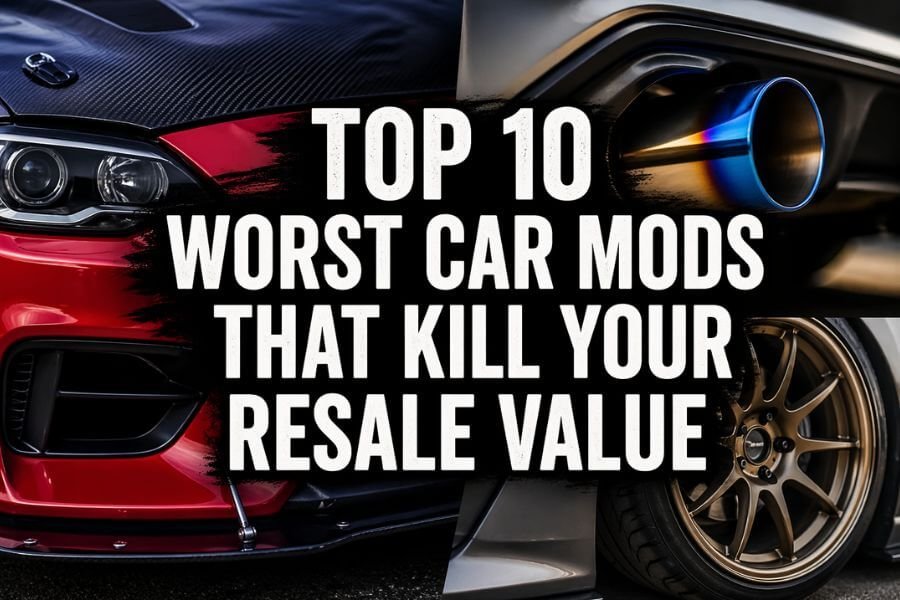
When you modify your car, you usually want it to look better, drive faster, or feel more personal. That makes sense. But here is the problem: many car owners do not think about. Not all car mods add value. In fact, some of them can seriously hurt your resale price when it is time to sell or trade in your vehicle. Buyers often prefer clean, stock cars because they feel safer and easier to maintain. If your car looks too customized or questionable, many buyers will simply walk away.
In this guide, you will learn about the top 10 worst car mods that kill your resale value. These are common upgrades that might seem cool at first, but can cost you a lot of money later. If you are planning to modify your car, this list will help you make smarter choices and protect your investment.
1. Extreme Body Kits
Extreme body kits can completely change how your car looks, but not in a good way for most buyers. While some people love aggressive styling, most buyers want a clean and simple design that feels timeless. Oversized bumpers, wide fenders, and unusual shapes often make your car look too niche.
These kits can also raise concerns about:
- Poor installation quality
- Hidden damage underneath
- Difficulty repairing parts
When it comes time to sell, buyers may assume the car was heavily driven or even abused. That makes them less willing to pay a good price. A subtle upgrade might be fine, but extreme body kits often reduce your resale appeal.
2. Loud Aftermarket Exhaust Systems
A loud exhaust can make your car sound powerful, but not everyone wants that. Many buyers prefer a quiet and comfortable driving experience. If your exhaust is too loud, it can feel annoying during daily driving.
This type of mod can also suggest:
- The car was driven aggressively
- Possible legal issues with noise limits
- Poor fuel efficiency
Even if the exhaust improves performance, the noise alone can scare off a large group of buyers. In most cases, loud exhaust systems lower resale value instead of increasing it.
3. Cheap Paint Jobs or Wraps
A bad paint job is one of the fastest ways to hurt your car’s value. Uneven paint, strange colors, or low-quality wraps can make your car look neglected. Bright or unusual colors might reflect your personal taste, but they limit your buyer pool.
Common issues include:
- Peeling or fading over time
- Poor surface preparation
- Hard to restore to its original color
Buyers often worry about what is hidden under the paint. Was the car damaged? Was it repaired cheaply? These doubts can reduce trust and lower the price buyers are willing to pay.
4. Oversized Wheels and Tires
Big wheels can look impressive, but they are not always practical. Oversized wheels can affect ride comfort, fuel efficiency, and even safety. They can also cause uneven wear on suspension parts.
Buyers may see this mod as a downside because:
- Replacement tires are more expensive
- Ride quality is worse
- Speedometer accuracy can be affected
While some people like larger wheels, going too big often makes your car less appealing to everyday buyers.
5. Interior Mods That Look Cheap
Interior upgrades should make your car feel better, not worse. Cheap seat covers, fake carbon fiber trim, or low-quality LED lighting can make your car look less valuable.
Common mistakes include:
- Poor-fitting materials
- Bright and distracting colors
- Cheap plastic finishes
Buyers want a clean and original interior. If your car feels modified in a low-quality way, it can create a negative first impression and reduce resale value quickly.
6. Lowering Kits Done Poorly
Lowering your car can improve handling and appearance, but only if done properly. Poorly installed lowering kits can cause major issues.
These include:
- Rough and uncomfortable ride
- Damage to suspension components
- Uneven tire wear
Buyers may worry about long-term damage or expensive repairs. A badly lowered car often signals neglect rather than performance improvement, which can hurt resale value.
7. Engine Mods Without Documentation
Engine upgrades can be exciting, but they can also scare buyers. If you have modified your engine without proper records or professional installation, it raises red flags.
Buyers may worry about:
- Reduced engine life
- Hidden mechanical issues
- Difficulty passing inspections
Even if your upgrades improve performance, a lack of proof can make buyers lose trust. Many will prefer a stock engine because it feels safer and more reliable.
8. DIY Electrical Modifications
Custom lighting, sound systems, and other electrical mods can seem fun, but DIY wiring jobs are risky. Poor wiring can lead to electrical failures or even fire hazards.
Buyers often avoid cars with:
- Messy wiring
- Non-standard components
- Unreliable electronics
Electrical problems are difficult and expensive to fix. If your car shows signs of DIY electrical work, it can significantly lower its resale value.
9. Removed Emissions Equipment
Some people remove emissions systems to gain performance, but this can cause serious problems. In many places, this is illegal and can prevent your car from passing inspections.
Buyers may see this as a major risk because:
- The car may not be road legal
- Repairs can be expensive
- It limits where the car can be sold
Even if the performance improves, removing emissions equipment almost always reduces resale value.
10. Unbranded or Low Quality Performance Parts
Not all performance parts are equal. Cheap or unknown brands can hurt your car’s value instead of improving it. Buyers often prefer trusted brands with proven quality.
Low-quality parts can lead to:
- Poor performance gains
- Faster wear and tear
- Reliability issues
When buyers see unknown parts, they may assume corners were cut. This reduces confidence and lowers how much they are willing to pay.
Conclusion
Car mods can be fun and exciting, but they are not always a smart investment. If you plan to sell your car in the future, you need to think carefully about what changes you make. Many popular mods can actually reduce your resale value by making your car less appealing, less reliable, or harder to trust.
If you want to protect your car’s value, focus on simple and high-quality upgrades. Keep your car clean, well-maintained, and close to its original condition. When in doubt, remember that most buyers prefer stock cars. Making smart choices today can help you get a better price tomorrow.
Frequently Asked Questions
Do all car mods reduce resale value?
No, not all mods reduce resale value. High-quality upgrades like professional window tint, good tires, or trusted brand parts can sometimes help. However, extreme or poorly done mods usually lower value because they reduce buyer trust.
Is it better to return a car to stock before selling?
Yes, in many cases, it is better to return your car to stock condition. A stock car appeals to more buyers and feels safer to purchase. If you still have the original parts, reinstalling them can help improve your resale price.
Do performance mods always scare buyers away?
Not always, but they often do. Some buyers like performance upgrades, especially if they are done professionally with documentation. However, many buyers worry about how the car was driven, which can reduce interest.
How can I mod my car without hurting resale value?
You can focus on subtle and reversible upgrades such as:
- High-quality tires
- Light cosmetic improvements
- Professional detailing
These changes improve your experience without limiting future buyers.
Why do buyers prefer stock cars?
Buyers prefer stock cars because they feel more reliable and predictable. A stock vehicle is easier to inspect, maintain, and resell later. It also reduces concerns about hidden problems or poor modifications.