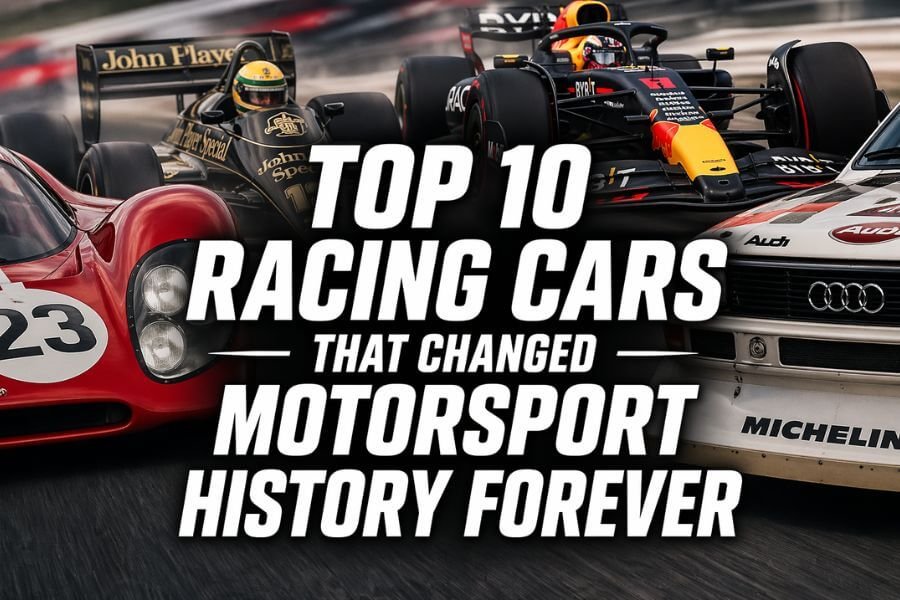
When you think about motorsport, you are really thinking about innovation, risk, and bold ideas that changed the way cars are built and raced. Some racing cars did more than just win trophies. They reshaped entire categories, introduced new technologies, and pushed engineers to think differently. These machines became legends not only because of their speed, but because of their impact on the sport itself. In this guide, you will explore ten racing cars that changed motorsport history forever. Each one tells a story of creativity, courage, and a drive to go faster than ever before.
1. Ford GT40
When you look at endurance racing history, the Ford GT40 stands out as a true game changer. Built to defeat Ferrari at the 24 Hours of Le Mans, this car did exactly that by dominating the race for four consecutive years from 1966 to 1969. What made it special was not just its speed but its engineering approach. Ford invested heavily in aerodynamics, durability, and teamwork between drivers. You can see how this car helped turn motorsport into a serious technological battle between manufacturers. It also proved that American companies could compete at the highest level of global racing.
2. Lotus 49
The Lotus 49 changed Formula One forever by introducing the engine as a structural part of the car. Before this, engines were simply mounted inside a chassis. With this design, the engine became part of the frame itself, reducing weight and increasing strength. If you watch modern F1 cars, you are still seeing this idea in action today. The Lotus 49 also introduced the famous Cosworth DFV engine, which became one of the most successful engines in racing history. This car showed how smart engineering could outperform raw power.
3. Porsche 917
The Porsche 917 is often seen as one of the fastest and most feared cars in endurance racing. When it first appeared, it was extremely difficult to handle, but once engineers refined it, the car became nearly unbeatable. It helped Porsche secure its first overall win at Le Mans and set new standards for speed. You can think of the 917 as the car that proved aerodynamics and power could work together in a new way. It pushed teams to take more risks and design cars that were faster than ever before.
4. Audi Quattro S1
If you enjoy rally racing, the Audi Quattro S1 is a name you cannot ignore. This car introduced all-wheel drive to top-level rally competition, which was a huge shift at the time. Before this, most rally cars used rear-wheel drive. The Quattro showed that all-wheel drive could provide better grip and control on rough surfaces like snow and gravel. You can still see this influence in modern rally cars today. It changed how teams approached traction and performance in difficult conditions.
5. McLaren MP4/4
The McLaren MP4/4 is one of the most dominant Formula One cars ever built. In the 1988 season, it won 15 out of 16 races. That level of dominance forced other teams to rethink everything from aerodynamics to engine performance. What made this car special was its balance. It was not just fast in a straight line but also incredibly efficient in corners. If you look at modern F1 design philosophy, you can see how teams still aim for that perfect balance that the MP4/4 achieved.
6. Williams FW14B
The Williams FW14B introduced active suspension technology to Formula One, and it changed how cars handled on the track. This system automatically adjusted the car’s ride height and balance while driving, giving drivers better control and consistency. It was so advanced that it was eventually banned to keep racing fair. When you look at modern racing rules, many restrictions exist because of innovations like this. The FW14B showed how technology could give a huge advantage in motorsport.
7. Ferrari 312T
The Ferrari 312T played a major role in bringing Ferrari back to the top of Formula One in the 1970s. Its transverse gearbox design improved weight distribution and handling, making the car more stable in corners. This innovation gave drivers more confidence and control, which is critical in high-speed racing. You can see how this focus on balance and handling became a key part of modern race car design.
8. Chaparral 2J
The Chaparral 2J is one of the most unusual racing cars ever built. It used fans at the rear to suck air from under the car, creating massive downforce. This allowed it to stick to the track like no other car at the time. While it was eventually banned, its concept inspired future aerodynamic developments. When you see modern race cars using ground effects, you are seeing ideas that started with cars like the 2J. It proved that thinking outside the box could lead to huge performance gains.
9. Mercedes-Benz W196
The Mercedes-Benz W196 was a symbol of precision engineering and dominance in the 1950s. It featured advanced fuel injection technology at a time when most cars still used carburetors. This gave it better efficiency and power delivery. The car also had a streamlined body for high-speed tracks. If you think about how modern racing focuses on efficiency and aerodynamics, the W196 was ahead of its time. It helped set the standard for future Formula One engineering.
10. Red Bull RB19
The Red Bull RB19 represents modern Formula One at its peak. It dominated the 2023 season with incredible consistency and speed. What makes this car important is how it combines all the lessons from the past. It uses advanced aerodynamics, efficient hybrid power, and smart engineering to achieve near perfection. When you look at the RB19, you are seeing the result of decades of innovation built on the foundations created by earlier racing legends.
Conclusion
As you can see, motorsport history is shaped by more than just race results. It is shaped by ideas, risks, and breakthroughs that change how cars are built and driven. Each of these racing cars brought something new to the table, whether it was better aerodynamics, improved handling, or advanced technology. When you watch a race today, you are seeing the legacy of these machines in action. They remind you that progress in motorsport never stops, and the next revolutionary car could be just around the corner.
Frequently Asked Questions
What makes a racing car historically important?
A racing car becomes historically important when it introduces new technology, changes design standards, or dominates its competition in a way that influences future cars. It is not just about winning races but about leaving a lasting impact on the sport.
Why are some innovative race cars banned?
Some race cars are banned because they create an unfair advantage or raise safety concerns. Motorsport organizations often update rules to keep competition balanced and protect drivers.
Do modern race cars still use ideas from older cars?
Yes, many modern race cars use ideas that were first introduced decades ago. Innovations like aerodynamics, engine design, and suspension systems have evolved over time but still rely on early breakthroughs.
Which motorsport category has seen the most innovation?
Formula One is often seen as the most innovative category because teams constantly push the limits of technology. However, endurance racing and rally have also introduced many important ideas.
Can racing technology be used in everyday cars?
Yes, many features in everyday cars come from motorsport. Examples include better braking systems, improved aerodynamics, and advanced safety features that were first tested on race cars.