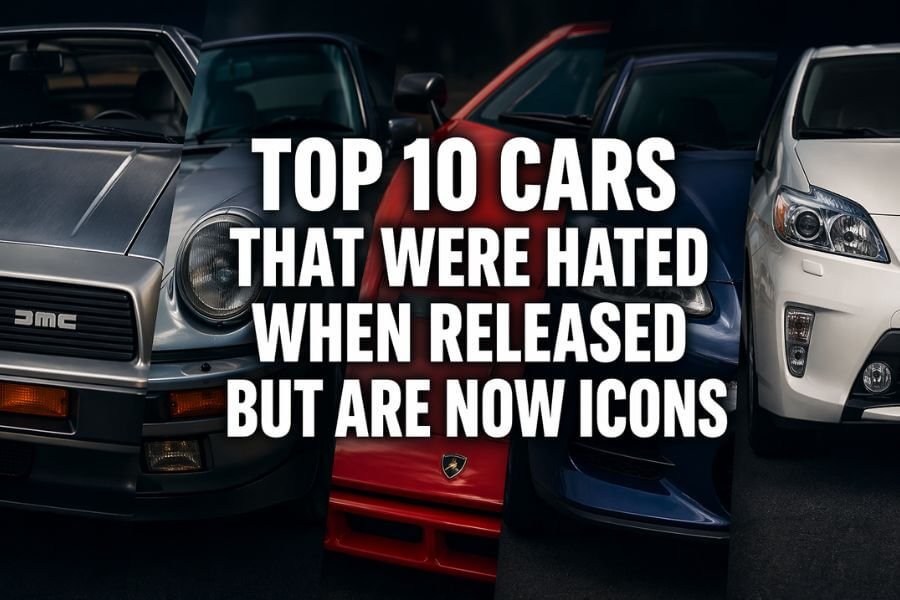
When you look at some of the most iconic cars in history today, it is easy to assume they were always loved. But that is not always true. Many cars that you now see as legends were once criticized, misunderstood, or even laughed at when they were first released. Design choices, new technology, or bold ideas can take time for people to accept. Over the years, these same cars proved their value, built loyal fan bases, and became symbols of innovation and style. In this article, you will discover 10 cars that were once hated but are now considered true icons. If you enjoy learning how opinions can change over time, this list will give you a fresh perspective on automotive history.
1. DeLorean DMC-12
When the DeLorean DMC-12 was released in the early 1980s, many people criticized it for its lack of performance. The stainless steel body and gullwing doors looked futuristic, but the engine was underpowered compared to other sports cars. Buyers expected speed, but got style instead. Over time, however, the car gained massive popularity thanks to its unique design and its role in pop culture. Today, you see it as a symbol of retro futurism and creativity. What once felt like a disappointment is now one of the most recognizable cars ever made.
2. Porsche 911
The Porsche 911 is now one of the most respected sports cars in the world, but when it first appeared in the 1960s, it faced strong criticism. People questioned its rear-engine layout, saying it would be unstable and difficult to handle. Early versions did have handling challenges, which added to the negative opinions. Over time, Porsche improved the design, and drivers began to appreciate its balance and performance. Today, you see the 911 as a benchmark for sports cars, proving that bold engineering choices can pay off.
3. Lamborghini Countach
When the Lamborghini Countach was introduced, its sharp angles and extreme design shocked the world. Some people thought it looked too aggressive and impractical. Visibility was poor, and the driving position was not comfortable. Despite this, the Countach became a poster car for an entire generation. You now see it as a symbol of luxury and performance. Its once controversial design helped shape what modern supercars look like today.
4. Ford Mustang II
The Ford Mustang II was released during a time when fuel efficiency became important due to the oil crisis. Compared to the original Mustang, it was smaller and less powerful. Many fans were disappointed and felt it did not live up to the Mustang name. However, over time, people began to appreciate it for what it represented. It helped the Mustang survive during a difficult era and kept the brand alive. Today, you can see it as an important part of Mustang history.
5. BMW i8
When the BMW i8 came out, many people were confused. It looked like a supercar but used a hybrid powertrain. Some critics said it was not fast enough to match its appearance. Others questioned its purpose. Over time, the i8 gained respect for its innovative design and forward-thinking technology. You now see it as a bridge between traditional sports cars and the future of electric performance vehicles.
6. Chevrolet Corvette C4
The Chevrolet Corvette C4 received mixed reactions when it launched in the 1980s. Some people felt it was too modern and lost the classic Corvette feel. Its digital dashboard and sharp styling were seen as strange at the time. As years passed, enthusiasts began to appreciate its role in modernizing the Corvette brand. Today, you can see it as a turning point that helped shape future generations.
7. Toyota Prius
The Toyota Prius is now known as a pioneer of hybrid vehicles, but when it first came out, it faced heavy criticism. People thought it looked unusual and doubted its performance. Many drivers did not understand the benefits of hybrid technology. Over time, the Prius proved its reliability and efficiency. Today, you see it as a symbol of eco-friendly driving and innovation in the automotive world.
8. Audi TT
The first-generation Audi TT stood out with its simple and rounded design. Some critics felt it was too plain and not practical enough. Early models also had stability issues at high speeds, which hurt its reputation. Audi quickly fixed these problems, and the car gained popularity. Today, you can see the TT as a design icon that influenced many modern cars.
9. Mazda MX-5 Miata
When the Mazda MX-5 Miata was introduced, some people dismissed it as too small and not powerful enough. Many compared it to older roadsters and did not expect much from it. However, the Miata focused on driving enjoyment rather than raw power. Over time, drivers fell in love with its balance, reliability, and fun experience. Today, you see it as one of the best-selling sports cars ever made.
10. Nissan GT-R
The Nissan GT-R R35 faced criticism when it replaced the Skyline GT-R name. Fans were upset about the change and the use of advanced electronics. Some believed it was too digital and lacked emotion. As time passed, the GT-R proved its performance on both roads and tracks. Today, you see it as a high-performance icon that competes with much more expensive supercars.
Conclusion
As you can see, first impressions do not always tell the full story. Many of the cars on this list were misunderstood when they first appeared. Some were ahead of their time, while others challenged what people expected from a car. Over the years, these vehicles proved their value and gained respect from drivers and enthusiasts around the world. When you look at modern cars today, remember that some of them may follow the same path. What seems strange now could become a future icon.
Frequently Asked Questions
Why do some cars get negative reactions when first released?
Cars often receive negative reactions because they introduce new ideas that people are not used to. This can include unusual designs, new technology, or changes to well-known models. It takes time for drivers to understand and accept these changes.
Can a car’s reputation really change over time?
Yes, a car’s reputation can change a lot over time. As people gain more experience with the car and see its long-term value, opinions can shift from negative to positive. Cultural influence also plays a big role.
Do controversial designs help cars become icons?
In many cases, yes. Unique or bold designs make cars stand out. Even if people dislike them at first, these designs can become memorable and eventually admired.
Are modern cars likely to follow the same trend?
Some modern cars may face criticism now, but could become icons in the future. As technology and design continue to evolve, opinions will keep changing.
What makes a car an icon in the long run?
A car becomes an icon through a mix of factors such as design, performance, cultural impact, and long-term reliability. When a car leaves a lasting impression, it earns its place in history.