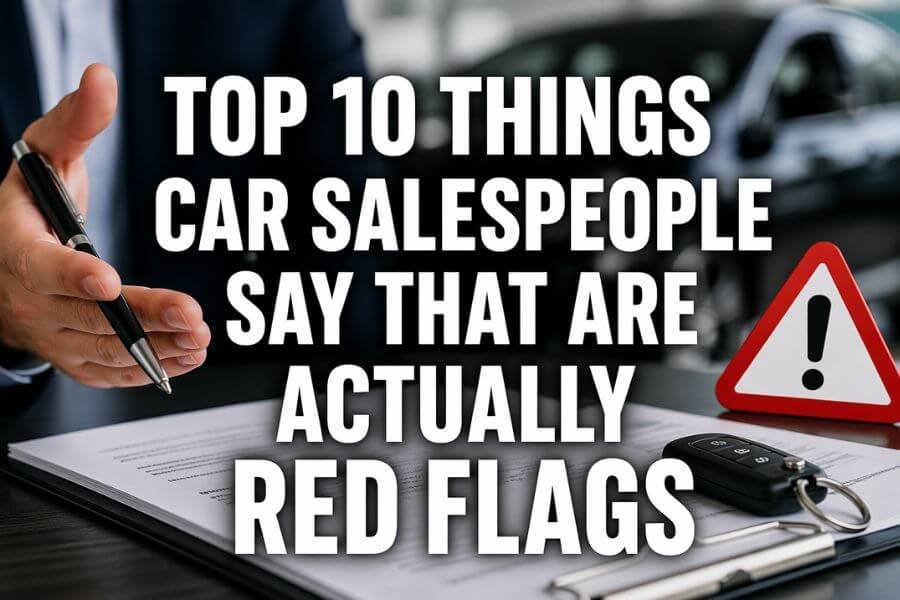
Buying a car can feel exciting, but it can also be stressful when you are not sure if you are getting a fair deal. When you walk into a dealership, you expect the salesperson to guide you and answer your questions. However, not everything they say is meant to help you. Some phrases may sound friendly or helpful, but they can actually be warning signs that you should slow down and think twice. If you know what to listen for, you can protect your money and make a smarter choice. In this guide, you will learn the top 10 things car salespeople say that are actually red flags, so you can avoid pressure, hidden costs, and bad deals.
1. “This deal is only good today”
This is one of the most common pressure tactics you will hear. When a salesperson says a deal is only available today, they are trying to rush you into making a decision without thinking it through. Buying a car is a big financial step, and you should never feel forced to decide quickly.
If a deal is truly good, it will likely still be available tomorrow or next week. A trustworthy salesperson will give you time to compare options and think about your budget. When you hear this phrase, treat it as a sign to slow down instead of speeding up. You should always take your time, review the details, and even leave the dealership if needed.
2. “Someone else is coming to buy this car”
This statement is meant to create fear that you might miss out. It pushes you to act fast because you think the car will be gone soon. While it is possible that another buyer is interested, this line is often used to increase urgency and reduce your ability to negotiate.
If you hear this, do not panic. Instead, stay calm and focus on whether the car is right for you. Ask for time to think, and do not let competition pressure you into a rushed purchase. If the car sells, there will always be other options available.
3. “We can focus on the monthly payment”
This might sound helpful, especially if you are worried about your budget. However, focusing only on the monthly payment can hide the true cost of the car. A lower monthly payment often means:
- A longer loan term
- Higher total interest
- Paying more over time
You should always look at the full price of the car, the interest rate, and the total amount you will pay by the end of the loan. A salesperson who avoids talking about the full cost is not giving you the complete picture.
4. “You don’t need to worry about the interest rate”
Interest rates have a big impact on how much you pay for your car. Even a small difference can add up to hundreds or thousands over time. When a salesperson tells you not to worry about it, they may be trying to hide a higher rate.
You should always ask for the exact interest rate and compare it with offers from banks or credit unions. Knowing your rate helps you understand the true cost of financing and gives you more power to negotiate.
5. “This is the best price you will find anywhere”
This claim sounds confident, but it is often not true. Prices can vary between dealerships, and there may be promotions or discounts elsewhere. A salesperson who says this is trying to stop you from shopping around.
Instead of taking their word for it, you should:
- Check prices online
- Visit multiple dealerships
- Compare similar cars
Doing a little research can save you a lot of money and help you find a better deal.
6. “The fees are standard and cannot be changed”
Dealerships often add extra fees to the final price. Some of these may be valid, but others can be negotiated or even removed. When a salesperson says the fees are fixed, they may be trying to avoid discussion.
You should always ask for a full breakdown of all fees. Look closely at each one and question anything that seems unclear. In many cases, you can reduce or remove certain charges by negotiating.
7. “This car is in perfect condition”
No used car is truly perfect. Even new cars can have small issues or wear from transport. When a salesperson claims a car is flawless, it is a sign you should be careful.
Always inspect the car yourself and consider getting a professional inspection. Look for signs of wear, damage, or repairs. A good salesperson will be honest about the condition instead of making unrealistic claims.
8. “You have to buy the add-ons”
Add-ons like extended warranties, protection plans, or accessories can increase the price quickly. Some salespeople may say these are required, but in most cases, they are optional.
Before agreeing to anything, ask which items are truly required and which are optional. Take time to decide if you really need them. Often, you can find similar services elsewhere for a lower price or choose to skip them entirely.
9. “Your trade-in is worth less than you think”
When you trade in your current car, the dealership may try to lower its value to increase their profit. If the offer seems too low, it could be a sign that they are not giving you a fair deal.
You should research your car’s value before visiting the dealership. Check online estimates and compare offers from different buyers. This gives you a strong position when negotiating your trade-in price.
10. “Sign here and we will explain everything later”
This is one of the biggest red flags you can hear. You should never sign a contract without fully understanding it. If a salesperson asks you to sign first and promises to explain later, you should stop immediately.
Always read every document carefully. Ask questions about anything you do not understand. Take your time and do not feel pressured to rush. A reliable salesperson will make sure you are comfortable before signing.
Conclusion
When you are buying a car, what you hear is just as important as what you see. Some phrases may sound normal, but they can signal pressure, hidden costs, or unfair practices. By knowing these red flags, you can stay in control and make better decisions.
Always take your time, ask questions, and do your own research. Do not be afraid to walk away if something does not feel right. The right car and the right deal will come when you stay patient and informed. With the tips in this guide, you can avoid common traps and feel more confident during your car-buying journey.
Frequently Asked Questions
How can you tell if a car salesperson is honest?
You can often tell by how they communicate. Honest salespeople are open, clear, and willing to answer your questions without pressure. They give you time to think and provide full details about pricing, fees, and financing. If someone avoids questions or pushes you to decide quickly, it may be a warning sign.
Is it okay to walk away from a deal?
Yes, it is always okay to walk away. In fact, walking away can be one of your strongest tools. If something feels wrong or unclear, leaving the dealership helps you avoid a bad decision and gives you time to think.
Should you bring someone with you when buying a car?
Bringing a friend or family member can be helpful. They can offer a second opinion, help you stay calm, and notice things you might miss. This can make the process less stressful and more balanced.
What is the best way to prepare before visiting a dealership?
Preparation is key. Before you go, you should:
- Set a clear budget
- Research car models and prices
- Check your credit score
- Know the value of your trade-in
This helps you stay confident and avoid being misled.
Can you negotiate everything when buying a car?
Many parts of a car deal can be negotiated, including the price, interest rate, fees, and trade-in value. While not everything will change, asking questions and negotiating can often lead to better terms and savings.