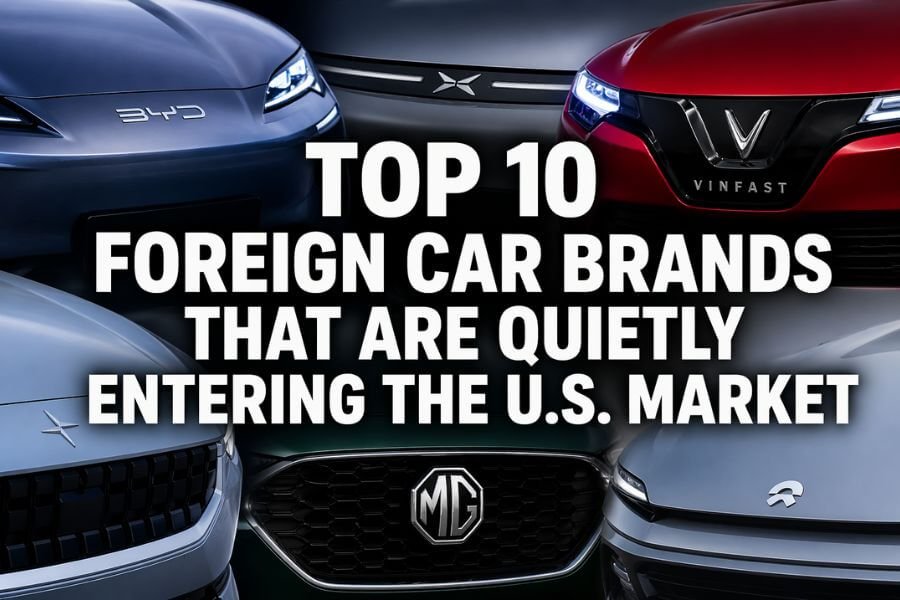
If you follow the car market closely, you might think you already know all the major brands in the United States. Names like Ford Motor Company and General Motors dominate headlines, while global giants like Toyota and BMW are already well established. But behind the scenes, a new wave of foreign car brands is quietly making moves to enter the U.S. market.
These brands are not always loud about their plans. Instead, they test the waters through electric vehicles, niche models, or partnerships. If you are someone who likes discovering new trends early, this is something you should pay attention to. You may soon see new badges on American roads that you have never noticed before.
In this article, you will explore ten foreign car brands that are slowly but surely entering the U.S. market. Some are focusing on electric cars, while others bring unique designs or strong value for money. Each one has a different strategy, but all of them are worth watching.
1. BYD Auto
If you are looking at global electric vehicle growth, BYD is one of the biggest names you cannot ignore. Based in China, BYD has grown rapidly and is now one of the world’s top EV makers.
In the U.S., BYD is not rushing into the passenger car market yet, but it has already entered through commercial vehicles like electric buses. This is a smart strategy because it allows the brand to build trust and infrastructure before selling cars directly to consumers.
Why BYD matters:
- Strong battery technology and vertical integration
- Competitive pricing compared to rivals
- Rapid global expansion
If BYD decides to fully launch passenger vehicles in the U.S., you could see affordable EV options that challenge existing brands.
2. NIO
NIO is often called the Tesla of China, and for good reason. It focuses on premium electric vehicles with advanced features and a strong brand image.
One of its most unique ideas is battery swapping, which lets you replace your battery in minutes instead of charging it. While this system is still expanding globally, it shows how NIO is trying to stand out.
Why you should watch NIO:
- Premium EV positioning
- Innovative battery swap system
- Strong focus on user experience
NIO has not fully entered the U.S. yet, but its global expansion suggests it is only a matter of time.
3. XPeng Motors
XPeng is another fast-growing EV company from China that is targeting tech-focused drivers. Its vehicles are known for smart features, including advanced driver assistance systems.
The brand is already expanding into Europe, which is often a stepping stone before entering the U.S. market. If you like technology-heavy cars, XPeng is one to keep an eye on.
Key strengths:
- Focus on autonomous driving tech
- Competitive pricing
- Modern, clean design
XPeng could appeal to younger buyers who want innovation without paying luxury prices.
4. VinFast
VinFast has moved faster than most new brands when it comes to entering the U.S. market. This Vietnamese automaker has already announced U.S. factories and launched electric SUVs.
Unlike many brands that test slowly, VinFast is going all in with direct sales, showrooms, and aggressive expansion plans.
What makes VinFast stand out:
- Quick entry into the U.S. market
- Focus on electric SUVs
- Competitive warranty and pricing
You may start seeing VinFast vehicles on the road sooner than expected.
5. Polestar
Polestar is not entirely new, but it is still in its early growth phase in the U.S. Originally part of Volvo Cars, Polestar has become its own brand focused on electric performance cars.
It already sells vehicles in the U.S., but its expansion is still quiet compared to larger competitors.
Why Polestar is interesting:
- Clean Scandinavian design
- Performance-focused EVs
- Backing from Volvo and Geely
Polestar could become a strong alternative to premium EV brands.
6. MG Motor
MG is a historic British brand that has been revived under Chinese ownership. While it is popular in markets like the UK and Australia, it has not yet fully re-entered the U.S.
That could change as MG focuses on affordable electric vehicles and compact SUVs.
Why MG could succeed:
- Strong brand recognition from the past
- Affordable pricing strategy
- Growing EV lineup
If MG returns to the U.S., it may target budget-conscious buyers.
7. Great Wall Motors
Great Wall Motors is one of China’s largest automakers, known for SUVs and pickup trucks. It has been exploring ways to enter the U.S. market for years.
Instead of rushing in, the company has been studying regulations and consumer preferences.
Key highlights:
- Strong SUV and truck lineup
- Experience in global markets
- Multiple sub-brands for different segments
If it enters the U.S., it could compete directly with American truck brands.
8. Rivian (Global-backed influence)
While Rivian is technically an American company, it deserves a spot because of its strong international backing, including investment from Amazon and global partners.
Its influence shows how global collaboration is shaping the U.S. car market.
Why Rivian matters in this list:
- Strong global investment
- Focus on electric trucks and SUVs
- Premium adventure branding
It reflects how foreign influence is still shaping the U.S. market indirectly.
9. Chery Automobile
Chery has been trying to enter the U.S. market for years. While it has not fully launched yet, it continues to explore opportunities through partnerships and branding strategies.
The company has strong experience in exporting cars to many countries.
Why Chery is worth watching:
- Global export experience
- Competitive pricing
- Expanding EV lineup
If Chery finds the right strategy, it could finally enter the U.S. market successfully.
10. Mahindra & Mahindra
Mahindra is well known for rugged SUVs and utility vehicles. It has already attempted to enter the U.S. market in the past and continues to show interest.
Its focus on durable and affordable vehicles could appeal to certain U.S. buyers, especially in rural areas.
Key advantages:
- Strong reputation for durability
- Experience in off-road vehicles
- Competitive pricing
Mahindra may not target mainstream buyers first, but it could find success in niche markets.
Conclusion
The U.S. car market is changing faster than ever, and you are starting to see new players quietly preparing their entry. While traditional brands still dominate, these foreign companies are building strategies that could reshape the market in the next few years.
Some are focusing on electric vehicles, while others are targeting affordability or niche segments. What they all have in common is patience. Instead of rushing in, they are testing, learning, and adapting.
If you stay ahead of these trends, you will be among the first to recognize new brands before they become mainstream. Whether you are planning to buy a car or just enjoy following the industry, these brands are worth keeping on your radar.
Frequently Asked Questions
Which foreign car brand is most likely to succeed in the U.S.?
It depends on strategy, but brands like BYD, VinFast, and Polestar have strong chances because they already have clear plans and a growing global presence. Their focus on electric vehicles also matches current U.S. trends.
Are Chinese car brands allowed in the U.S. market?
Yes, but they must meet strict safety, environmental, and regulatory standards. This is one reason many Chinese brands enter slowly through partnerships or limited segments first.
Why are many new brands focusing on electric vehicles?
Electric vehicles are easier for new brands to enter because the market is still growing and less dominated by legacy companies. EVs also align with government policies and consumer demand.
Will these new brands be cheaper than existing cars?
In many cases, yes. Brands like MG and Chery are known for offering strong value for money. However, premium brands like NIO may compete at higher price levels.
How long does it take for a new car brand to fully enter the U.S. market?
It can take several years. Companies need to handle regulations, build supply chains, and create dealer or direct sales networks before launching widely.