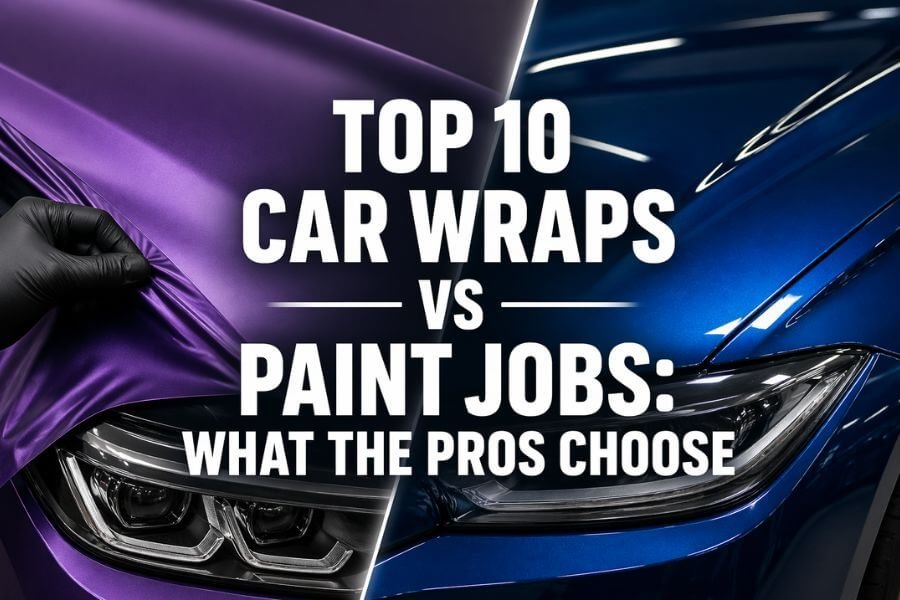
If you want to change how your car looks, you usually face one big choice: car wraps or paint jobs. Both can transform your vehicle, but they work in very different ways. A wrap is a vinyl layer applied over your car’s surface, while paint is a permanent finish applied directly to the body. Each option has its own strengths, costs, and long-term effects.
As someone looking to upgrade your car, you might wonder what professionals actually choose. Car enthusiasts, detailers, and even auto shops often prefer one over the other depending on the situation. In this guide, you will learn the top 10 differences between car wraps and paint jobs, and what the pros usually go for. This will help you make a smart decision based on your goals, budget, and lifestyle.
1. Cost: Wraps Are Usually More Affordable
When it comes to price, wraps are often the more budget-friendly option. A full car wrap typically costs less than a high-quality paint job, especially if you want custom colors or effects.
Here is a simple comparison:
- Car wrap: mid-range pricing, depending on size and material
- Paint job: can range from basic to very expensive for premium finishes
Professionals often choose wraps when they want a new look without spending too much. If you are working within a budget but still want a strong visual impact, wraps are usually the better choice.
2. Installation Time: Wraps Are Faster
Time matters, especially if you use your car daily. A wrap can often be installed within a few days, while a full paint job may take one to several weeks.
Why paint takes longer:
- Surface preparation is more detailed
- Multiple paint layers and drying time
- Clear coat and curing process
Wraps skip most of these steps, so pros prefer them when speed is important. If you do not want your car sitting in a shop for weeks, a wrap is the quicker solution.
3. Durability: Paint Lasts Longer
Paint jobs usually last longer than wraps. A high-quality paint job can last many years if you take care of it, while wraps typically last around 5 to 7 years.
However, durability depends on how you use your car:
- Daily drivers may wear wraps faster
- Garage-kept cars help both options last longer
Professionals choose paint when long-term durability is the top priority. If you want something that lasts the life of the car, paint is a better investment.
4. Flexibility: Wraps Offer More Design Options
Wraps give you more creative freedom. You can choose from:
- Matte finishes
- Gloss finishes
- Satin textures
- Carbon fiber looks
- Custom graphics and prints
Paint can also be customized, but it is harder and more expensive to achieve complex designs. Pros often use wraps for unique styles or branding because they are easier to change later.
If you want to stand out or try something bold, wraps give you more options.
5. Reversibility: Wraps Can Be Removed
One of the biggest advantages of wraps is that they are not permanent. You can remove them without damaging the original paint if they are installed correctly.
This is useful if you:
- Plan to sell your car later
- Like to change styles often
- Want to protect factory paint
Professionals often recommend wraps for leased cars or newer vehicles because they keep the original finish intact.
6. Maintenance: Both Need Care, but in Different Ways
Both wraps and paint need regular care, but the approach is different.
Wrap maintenance tips:
- Hand wash instead of automatic car washes
- Avoid harsh chemicals
- Protect from long sun exposure
Paint maintenance tips:
- Wax and polish regularly
- Fix chips and scratches early
- Use paint protection products
Pros often say wraps are easier to maintain in the short term, but paint offers more long-term flexibility with repairs and detailing.
7. Protection: Wraps Add a Protective Layer
Wraps act like a shield for your car’s original paint. They protect against:
- Minor scratches
- UV rays
- Small road debris
Paint does not provide this extra layer unless you add something like a protective coating.
This is why professionals often use wraps to preserve expensive paint finishes. If you want to keep your car looking new underneath, a wrap is a smart choice.
8. Repair: Paint Is Easier to Fix in Small Areas
If part of your wrap gets damaged, you may need to replace a whole section. Matching the exact color or pattern can sometimes be tricky.
Paint, on the other hand, allows for spot repairs:
- Small scratches can be buffed out
- Chips can be touched up
- Panels can be repainted individually
Professionals often prefer paint for long-term ownership because repairs are simpler over time.
9. Finish Quality: Paint Still Feels More Premium
Even though wraps have improved a lot, paint still has a deeper and more natural finish. High-end paint jobs offer:
- Better shine and depth
- Smoother feel
- More refined appearance
Wraps can look great, but under close inspection, paint usually wins. This is why pros choose paint for luxury builds or show cars where perfection matters.
10. Professional Preference: It Depends on the Purpose
When you look at what professionals choose, the answer is not one size fits all. It depends on the goal.
Pros choose wraps when:
- They want a temporary style change
- They need a quick installation
- They want to protect the original paint
- They are working with branding or advertising
Pros choose paint when:
- They want a permanent finish
- They are building a show car
- They value long-term durability
- They want the highest quality look
In simple terms, wraps are about flexibility and convenience, while paint is about permanence and premium quality.
Conclusion
Choosing between a car wrap and a paint job comes down to your needs. If you want something affordable, flexible, and easy to change, a wrap is a great option. It gives you creative freedom and protects your car at the same time. On the other hand, if you want a long-lasting, high-quality finish that feels truly premium, paint is the better choice.
Professionals do not always pick one over the other. Instead, they match the option to the purpose. You should do the same. Think about your budget, how long you plan to keep the car, and how often you like to change its look. Once you understand these factors, the decision becomes much easier.
Frequently Asked Questions
Is a car wrap better than paint for resale value?
A car wrap can help protect the original paint, which may improve resale value if the factory finish stays in good condition. Buyers often prefer original paint, so removing the wrap before selling can be a smart move.
Can you wrap a car with damaged paint?
You can wrap a car with minor paint damage, but large chips, rust, or peeling paint can affect how the wrap sticks. It is best to fix major issues before applying a wrap to get a smooth finish.
Does a car wrap affect insurance?
In some cases, a wrap may slightly increase your insurance cost because it changes the car’s appearance and value. It is a good idea to inform your insurance provider if you install a wrap or custom paint job.
How long does it take to remove a car wrap?
Removing a wrap usually takes a few hours to a full day, depending on the size of the vehicle and how long the wrap has been on. Professionals can remove it safely without damaging the paint underneath.
Can you wash a wrapped car normally?
You can wash a wrapped car, but hand washing is the safest option. Avoid automatic car washes with strong brushes, as they can damage the vinyl surface over time.