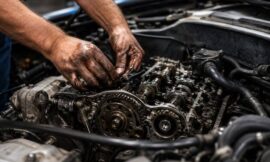
Overfilling your engine oil by one quart causes the spinning crankshaft to whip the excess oil into a thick, frothy foam. This aerated oil cannot be properly pumped by the oil pump, leading to a sudden drop in oil pressure and severe engine wear.
How excess oil destroys engine lubrication
Your engine is designed with a specific oil capacity, usually between 4 and 6 quarts, which sits safely in the oil pan below the moving parts. The oil pump draws this liquid from the bottom of the pan and circulates it through the engine blocks to protect your bearings, pistons, and valve train.
When you add an extra quart of oil, the fluid level inside the oil pan rises significantly. This brings the top of the oil pool into direct contact with the crankshaft counterweights as they spin at thousands of revolutions per minute. The crankshaft acts like a giant kitchen mixer, beating air bubbles into the liquid oil.
This creates a layer of oil foam. Air bubbles are terrible lubricants because they compress under pressure instead of keeping metal parts separated. When the oil pump sucks in this frothy mixture, your oil pressure drops, causing metal-on-metal friction that can quickly ruin your engine bearings.
Symptoms of a one-quart overfill
- A frothy dipstick: Pull your engine dipstick out after the engine has run for a few minutes. If the oil looks like a bubbly milkshake or chocolate mousse instead of a clear amber liquid, your oil level is too high.
- White smoke from the exhaust: The high oil level increases pressure inside the crankcase. This forces excess oil past your PCV (Positive Crankcase Ventilation) valve and into the intake manifold, where it burns in the combustion chambers and creates thick white or blue smoke.
- Oil leaks under the car: The elevated internal pressure places intense stress on your engine seals. You may notice fresh oil dripping from your front or rear main crankshaft seals onto your driveway.
How to safely drain the extra oil
If you realize you have added too much oil, do not drive the vehicle. You need to remove the excess oil before running the engine for an extended period.
- The dipstick siphon method: The easiest and cleanest way to fix a one-quart overfill is to use a fluid extraction pump. Insert the narrow plastic tube down into the dipstick tube until it hits the bottom of the oil pan. Pump out exactly one quart of fluid into a measuring container, then recheck your dipstick.
- The drain plug method: If you do not have an extraction pump, jack up the vehicle safely and place a clean drain pan beneath the oil pan. Loosen the oil drain plug slowly. Instead of removing the plug completely, hold it against the threads and back it off just enough to let a steady stream of oil trickle out. Once you have let about a quart drain out, tighten the plug back down to factory torque specs.
The costly seal failure to worry about
The biggest issue with driving a vehicle overfilled by a quart is not just the temporary loss of oil pressure; it is the permanent damage done to your rear main seal.
The rear main seal sits at the back of the engine block where the crankshaft connects to the transmission. When frothy oil and high crankcase pressure push against this rubber seal, it can flip the seal lip outward or rupture it entirely. Replacing a blown rear main seal requires completely removing the transmission from the vehicle, turning a simple oil mistake into a highly expensive repair job at a professional mechanic shop. Always check your dipstick progressively as you fill your oil, and never guess the amount.