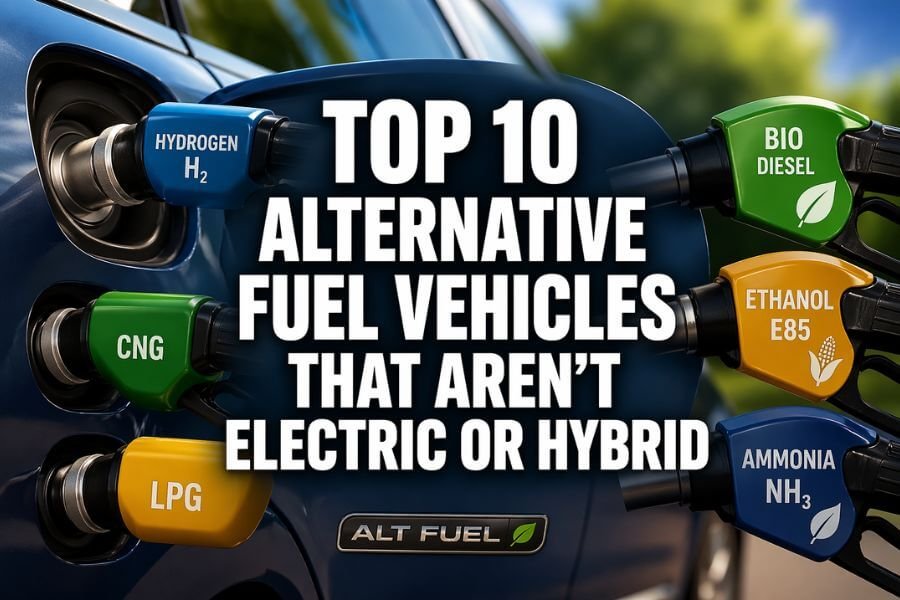
When you think about alternative fuel vehicles, your mind probably goes straight to electric or hybrid cars. But those are not your only options. If you are looking for something different, there are many vehicles that run on fuels other than gasoline, diesel, or electricity. These vehicles can help reduce emissions, lower fuel costs, and give you more flexibility depending on where you live.
In this guide, you will discover ten alternative fuel vehicles that are not electric or hybrid. These options include hydrogen, compressed natural gas, propane, ethanol, and even solar-assisted technologies. Each one offers a unique way to drive more sustainably while still using familiar engines and driving experiences. If you want to explore beyond EVs, this list will give you a clear starting point.
1. Hydrogen Fuel Cell Vehicles Like Toyota Mirai
Hydrogen fuel cell vehicles use hydrogen gas to create electricity inside the car, but they are not classified as traditional electric vehicles because they do not rely on batteries in the same way. Instead, they produce electricity through a chemical reaction, and the only emission is water vapor.
If you choose a hydrogen vehicle like the Toyota Mirai, you get:
- Quick refueling times similar to gasoline cars
- Long driving range
- Zero harmful emissions
The main downside is limited hydrogen fueling stations, but this technology is growing in certain regions.
2. Hydrogen SUV Option Like Hyundai NEXO
If you prefer an SUV, the Hyundai NEXO is another strong hydrogen-powered option. It offers a more practical design for families while still using clean fuel technology.
What makes it appealing:
- Spacious interior for daily use
- Smooth and quiet driving experience
- Advanced safety features
Hydrogen SUVs like this show that alternative fuels are not just for small cars.
3. Compressed Natural Gas Vehicles Like Honda Civic GX
Compressed natural gas, also known as CNG, is one of the most widely used alternative fuels in the world. Vehicles like the Honda Civic GX run on natural gas instead of gasoline.
Benefits of CNG vehicles include:
- Lower emissions compared to gasoline
- Cheaper fuel costs in many regions
- Reliable engine performance
However, you need access to CNG fueling stations, which are more common in some countries than others.
4. Bi-Fuel Pickup Trucks Like Ford F-150 CNG
Bi-fuel vehicles can run on both gasoline and natural gas, giving you more flexibility. The Ford F-150 CNG is a great example, especially if you need a work truck.
Why you might choose a bi-fuel truck:
- You can switch fuels depending on availability
- Extended driving range
- Strong towing and payload capabilities
This makes it a practical choice for both personal and business use.
5. Propane-Powered Vehicles Like Chevrolet Express LPG
Propane, also known as LPG, is another popular alternative fuel. Vehicles like the Chevrolet Express LPG are often used in fleets, but they can also work for personal use.
Key advantages include:
- Cleaner burning than gasoline
- Lower fuel costs
- Widely available in many areas
Propane vehicles are especially common in delivery services and school transportation.
6. Ethanol Flexible Fuel Vehicles Like Ford Focus Flex Fuel
Flexible fuel vehicles can run on gasoline or ethanol blends like E85. The Ford Focus Flex Fuel is one example that gives you this flexibility.
Why ethanol vehicles are useful:
- You can use regular gasoline if needed
- Ethanol is renewable and plant-based
- Often cheaper than gasoline
This makes them a simple entry point into alternative fuels without changing your driving habits too much.
7. Biodiesel Diesel Cars Like Volkswagen Jetta TDI
If you already like diesel engines, biodiesel is an easy switch. Vehicles like the Volkswagen Jetta TDI can run on biodiesel blends made from vegetable oils or animal fats.
Benefits include:
- Reduced carbon emissions
- Compatibility with many diesel engines
- Easy transition from regular diesel
Biodiesel is one of the most practical alternative fuels because it works with existing infrastructure.
8. Methanol Fuel Vehicles (Experimental and Fleet Use)
Methanol is another alternative fuel made from natural gas, coal, or biomass. While not common for personal cars, it has been used in racing and fleet vehicles.
What makes methanol interesting:
- High-performance fuel
- Can be produced from multiple sources
- Cleaner burning than gasoline
You may not find methanol cars in dealerships, but it shows how diverse fuel options can be.
9. Solar-Assisted Vehicles Like Lightyear 0
Solar-assisted vehicles use built-in solar panels to support energy use. While many solar cars also use batteries, some designs focus on reducing reliance on external charging rather than acting like typical electric vehicles.
Why solar-assisted cars stand out:
- Use sunlight to extend range
- Reduce fuel dependency
- Innovative and future-focused design
These vehicles are still emerging, but they show how energy can come directly from the environment.
10. Ammonia Fuel Engine Vehicles (Emerging Technology)
Ammonia is an exciting new fuel being explored for engines. It does not produce carbon dioxide when burned, making it a promising clean fuel.
Potential advantages:
- Zero carbon emissions at the tailpipe
- Easy to store and transport compared to hydrogen
- Suitable for large vehicles and industrial use
While ammonia cars are not widely available yet, they could become a major alternative fuel option in the future.
Conclusion
You do not have to go electric or hybrid to drive a more sustainable vehicle. As you have seen, there are many alternative fuel options available right now and even more on the way. From hydrogen and natural gas to ethanol and biodiesel, each option offers its own mix of benefits and challenges.
If you want flexibility, bi-fuel or flex fuel vehicles are a great choice. If you want zero emissions, hydrogen cars are worth considering. And if you prefer a simple transition, biodiesel or ethanol vehicles can fit easily into your current lifestyle.
The future of driving is not just electric. It is diverse, innovative, and full of options that can match your needs and goals. By understanding these alternatives, you can make a smarter and more informed decision for your next vehicle.
Frequently Asked Questions
Are alternative fuel vehicles cheaper to run than gasoline cars?
In many cases, yes. Fuels like natural gas, propane, and ethanol are often cheaper than gasoline. However, the total cost depends on fuel availability, vehicle price, and maintenance. You should compare local fuel prices before deciding.
Is it hard to find fuel for these vehicles?
It depends on the fuel type. Hydrogen and CNG stations are limited in some areas, while propane and ethanol are more widely available. You should check fueling stations near your location before choosing a vehicle.
Do alternative fuel vehicles need special maintenance?
Most alternative fuel vehicles do not require complex maintenance. In fact, some fuels burn cleaner, which can reduce engine wear. However, certain systems like hydrogen fuel cells may need specialized service.
Can you convert a regular car to use alternative fuel?
Yes, some vehicles can be converted to run on fuels like CNG, propane, or ethanol. However, conversions can be expensive and must meet safety standards. It is often easier to buy a factory-built alternative fuel vehicle.
Which alternative fuel is the most environmentally friendly?
Hydrogen and ammonia have the lowest emissions at the point of use. However, the overall impact depends on how the fuel is produced. Renewable sources like biofuels and green hydrogen offer the best environmental benefits.