Table of Contents
A long road trip can be one of the best ways to travel. You get freedom, flexibility, and the chance to enjoy every mile at your own pace. But before you load your bags and hit the highway, your car needs a quick but careful inspection.
Many roadside breakdowns happen because drivers skip simple checks that only take a few minutes. Problems like worn tires, low fluids, weak batteries, or bad brakes can quickly turn a fun trip into an expensive headache.
The good news is that you do not need to be a mechanic to prepare your vehicle properly. By checking a few important things before leaving, you can drive with more confidence, improve safety, and avoid unnecessary stress during your journey.
Quick Summary Table 🛣️
| Check Item | Why It Matters | What You Should Look For |
|---|---|---|
| Tires | Keeps you safe and improves fuel economy | Tire pressure, tread depth, damage |
| Engine Oil | Protects the engine from wear | Oil level and oil condition |
| Brakes | Essential for stopping safely | Strange sounds, vibration, weak braking |
| Battery | Prevents unexpected starting problems | Corrosion, weak starts, battery age |
| Coolant | Prevents overheating | Proper coolant level and leaks |
| Lights | Helps you see and be seen | Working headlights, brake lights, signals |
| Wipers and Washer Fluid | Improves visibility | Clean wiper action and full fluid tank |
| Belts and Hoses | Prevents engine failures | Cracks, leaks, worn rubber |
| Spare Tire and Emergency Kit | Helps during emergencies | Inflated spare and working tools |
| Air Conditioning and Cabin Comfort | Makes long drives easier | Strong airflow and cool air |
How We Ranked These Checks 🔍
We focused on the factors that matter most before a long road trip:
- Safety importance
- Risk of breakdown
- Ease of checking at home
- Cost of ignoring the issue
- Impact on comfort during long drives
- Importance for fuel efficiency
- Likelihood of failure during highway driving
- Ability to prevent expensive repairs
1. Check Your Tires Carefully 🛞
Your tires are one of the most important parts of your car during a road trip. They affect handling, braking, comfort, and fuel economy. A tire problem on the highway can become dangerous very quickly.
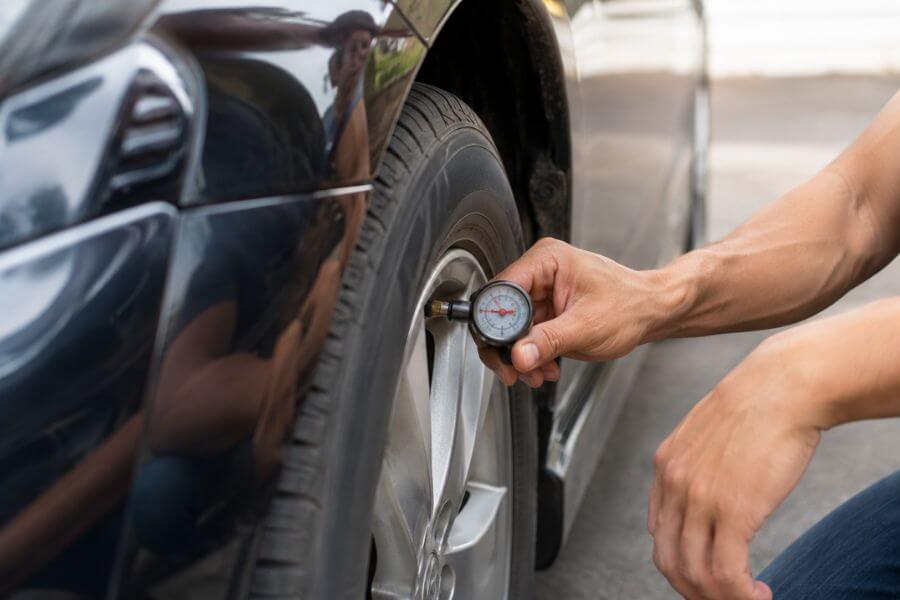
Start by checking tire pressure using a quality tire gauge. Your recommended pressure is usually listed inside the driver’s side door frame. Do not rely only on the tire’s sidewall number because that is usually the maximum pressure, not the recommended one.
Next, inspect the tread depth. If the tread looks shallow, your tires may struggle in rain or rough road conditions. Uneven wear can also signal alignment or suspension problems.
Look closely for:
- Cracks in the sidewall
- Bulges or bubbles
- Nails or sharp objects
- Uneven wear patterns
Do not forget the spare tire. Many drivers remember the main tires but completely ignore the spare until they need it.
2. Inspect Your Engine Oil 🛢️
Engine oil keeps internal engine parts lubricated and cool. Driving long distances with dirty or low oil can cause serious engine damage.
Check your oil level using the dipstick while the engine is cool and parked on level ground. The oil should sit between the minimum and maximum marks.
Also, pay attention to the oil’s condition. Fresh oil usually looks smooth and amber colored. Extremely dark or gritty oil may mean it is time for a change.
If your oil change is already close to due, it is smarter to handle it before the trip instead of waiting until later.
Ignoring oil maintenance during a long drive can lead to:
- Reduced engine performance
- Overheating
- Poor fuel economy
- Expensive engine repairs
3. Test Your Brakes Before Leaving 🛑
Your brakes are critical for highway safety, mountain roads, sudden stops, and heavy traffic. Even small brake issues can become major problems during long trips.
Pay attention to how your brakes feel during normal driving. Warning signs include:
- Squeaking or grinding sounds
- Vibration while braking
- Soft brake pedal
- Longer stopping distances
- Pulling to one side
Brake pads naturally wear down over time. If they are already thin, replace them before your trip instead of risking brake damage far from home.
Also, check your brake fluid level. Low brake fluid can reduce braking performance and signal possible leaks.
A healthy braking system gives you peace of mind during busy highway driving and unexpected situations.
4. Make Sure the Battery Is Healthy 🔋
A weak battery can ruin your trip before it even starts. Batteries often fail without much warning, especially during extreme temperatures.
If your car struggles to start, the battery may already be weakening. Dim headlights and flickering interior lights can also point to battery issues.
Open the hood and inspect the battery terminals. White or blue corrosion around the connections can reduce electrical performance.
You should also consider battery age. Most car batteries last around three to five years. If yours is older, testing it before your trip is a smart move.
A quick battery inspection now can help you avoid:
- Being stranded at gas stations
- Emergency jump starts
- Delayed travel plans
- Electrical system problems
5. Check Coolant Levels and Cooling System 🌡️
Long drives place extra stress on your engine, especially during hot weather or mountain driving. Your cooling system prevents overheating and keeps engine temperatures stable.
Check the coolant reservoir while the engine is cool. The fluid should sit between the minimum and maximum marks.
You should also look for signs of leaks around the radiator, hoses, or under the car. Sweet smells or puddles can point to coolant leaks.
If your engine temperature gauge has been running hotter than normal lately, do not ignore it before a road trip.
Overheating can quickly cause severe engine damage and expensive repairs. A few minutes of inspection can save thousands of dollars later.
6. Test All Exterior Lights 💡
Working lights are essential for both safety and legal driving requirements. Other drivers need to clearly see your signals, brake lights, and headlights.
Walk around your car and test:
- Headlights
- High beams
- Brake lights
- Turn signals
- Reverse lights
- Hazard lights
- Fog lights if equipped
Replace weak or burned-out bulbs immediately. It is also smart to clean cloudy headlight lenses because dirty headlights reduce nighttime visibility.
Good lighting becomes even more important during rain, fog, or nighttime highway driving.
7. Replace Worn Wiper Blades and Fill Washer Fluid 🌧️
Many drivers forget about windshield wipers until bad weather suddenly appears. Poor visibility can become dangerous within seconds during heavy rain.
Turn on your wipers and check for:
- Streaking
- Skipping
- Squeaking
- Missed spots
If the rubber looks cracked or worn, replace the blades before leaving.
Fill your windshield washer fluid completely. Long drives often mean bugs, dust, mud, and road spray covering your windshield.
Clean visibility helps reduce eye strain and makes driving much safer during changing weather conditions.
8. Inspect Belts and Hoses 🔧
Belts and hoses may not look exciting, but they are essential to your engine’s operation. A broken belt or leaking hose can leave you stranded quickly.
Look under the hood for:
- Cracked rubber
- Frayed belts
- Soft or swollen hoses
- Fluid leaks
- Loose connections
Squealing noises from the engine area can sometimes signal belt problems.
If you are unsure what to inspect, a mechanic can quickly check these parts during a routine inspection.
Replacing a worn belt at home is far easier than dealing with a breakdown in the middle of nowhere.
9. Pack and Check Emergency Equipment 🧰
Even well-maintained cars can still face unexpected situations. Having emergency equipment ready can make a huge difference.
At a minimum, your emergency kit should include:
- Spare tire
- Jack and lug wrench
- Jumper cables
- Flashlight
- First aid kit
- Phone charger
- Bottled water
- Basic tools
- Tire pressure gauge
You should also confirm that you know how to use your spare tire tools. Many people discover missing or damaged tools only after getting a flat tire.
Preparation helps you stay calm and safe during roadside emergencies.
10. Test Air Conditioning and Cabin Comfort ❄️
Comfort matters more than many people realize during long road trips. Hours inside a hot or uncomfortable cabin can quickly become exhausting.
Test your air conditioning before leaving. Weak airflow or warm air may signal refrigerant or system issues.
Also check:
- Cabin air filter condition
- Seat comfort
- Charging ports
- Navigation system
- Bluetooth connection
- Interior cleanliness
A comfortable cabin helps reduce fatigue and makes the entire trip more enjoyable for everyone inside the vehicle.
Conclusion 🏁
Preparing your car before a long road trip is one of the smartest things you can do as a driver. Small checks today can prevent major problems tomorrow.
By inspecting your tires, brakes, fluids, battery, cooling system, lights, and emergency equipment, you greatly reduce the risk of breakdowns and stressful surprises.
Road trips should be about enjoying the journey, not worrying about mechanical issues. Taking a little extra time before departure can help you drive farther, safer, and with much more confidence.
Frequently Asked Questions ❓
How far in advance should you inspect your car before a road trip?
It is best to inspect your car at least a few days before leaving. This gives you enough time to fix any problems without rushing.
Should you get a professional inspection before a long drive?
If your vehicle is older, has high mileage, or has shown recent problems, a professional inspection is a smart idea. Mechanics can spot issues you might miss at home.
Is it necessary to rotate tires before a road trip?
If your tires are already close to their recommended rotation interval, rotating them before the trip can improve tire wear and handling.
What fluids should you top off before traveling?
You should check engine oil, coolant, brake fluid, power steering fluid, transmission fluid, and windshield washer fluid before leaving.
How can you improve fuel economy during a road trip?
Keeping tires properly inflated, removing unnecessary weight, driving smoothly, and maintaining steady speeds can all help improve fuel efficiency during long drives.