Table of Contents
Your car is no longer just a machine with wheels and an engine. Modern vehicles are packed with internet connections, smart apps, wireless systems, cameras, sensors, and software updates. While these features make driving easier and safer, they also create new cybersecurity risks that many drivers never think about.
Hackers are no longer only targeting computers and smartphones. Connected cars have become attractive targets because they store personal data, track your location, and control important vehicle systems. Even something as simple as your phone pairing with your car can create a security gap if you are not careful.
The good news is that most risks can be reduced with smart habits and basic awareness. In this guide, you will learn the biggest cybersecurity dangers facing modern car owners and what you can do to protect yourself.
Quick Summary Table 🚗
| # | Cybersecurity Risk | Main Danger | Simple Prevention Tip |
|---|---|---|---|
| 1 | Keyless Entry Hacking | Car theft | Use signal blocking pouches |
| 2 | Mobile App Vulnerabilities | Remote access to your car | Use strong passwords |
| 3 | Public WiFi Risks | Data theft | Avoid unsecured networks |
| 4 | Bluetooth Exploits | Device intrusion | Turn Bluetooth off when unused |
| 5 | Fake Software Updates | Malware installation | Update only through official sources |
| 6 | GPS Tracking Abuse | Privacy invasion | Review app permissions |
| 7 | USB Port Attacks | Malware spread | Avoid unknown USB devices |
| 8 | Smart Charging Station Risks | EV account theft | Use trusted charging networks |
| 9 | Connected Camera Vulnerabilities | Privacy leaks | Keep systems updated |
| 10 | Data Collection by Vehicles | Personal data exposure | Regularly reset stored data |
How We Ranked These Risks 🛡️
We ranked these cybersecurity risks using several important factors:
- How common the threat is for everyday drivers
- How serious the financial or privacy damage could become
- How easy the attack is for criminals to carry out
- How many modern vehicles could be affected
- How difficult the problem is to detect
- Whether the issue can impact vehicle safety
- How often connected technologies are used in modern cars
1. Keyless Entry Relay Attacks 📡
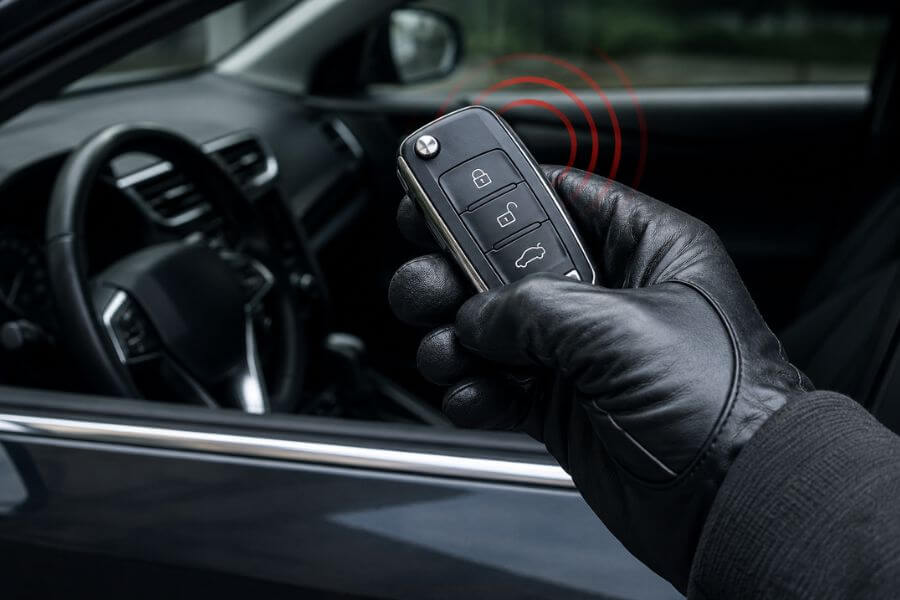
Keyless entry systems are one of the biggest conveniences in modern vehicles. You can unlock your car and start the engine without touching your key fob. Unfortunately, criminals have learned how to exploit this technology.
In a relay attack, thieves use devices that copy and extend the signal from your key fob. One person may stand near your house while another stands beside your vehicle. The device tricks the car into believing the real key is nearby, allowing thieves to unlock and even start the vehicle.
This type of attack has become more common because many drivers leave their keys near front doors or windows. Luxury cars are especially popular targets, but many mainstream vehicles are also vulnerable.
To reduce your risk:
- Keep your key fob far from doors and windows
- Store keys in a signal-blocking pouch
- Turn off keyless entry if your vehicle allows it
- Check whether your automaker offers updated security features
Many owners still believe car theft requires physical break-ins, but modern thieves often steal vehicles without leaving visible damage.
2. Weak Mobile App Security 📱
Many automakers now offer smartphone apps that let you start your engine, unlock doors, locate your car, or check fuel levels remotely. These features are convenient, but they can also become security weak points.
If your app account uses a weak password or lacks two-factor authentication, hackers may gain control of your vehicle functions. In some cases, attackers have used stolen login information from unrelated data breaches to access connected car accounts.
Some risks include:
- Unlocking doors remotely
- Tracking your vehicle location
- Accessing stored personal information
- Disabling certain vehicle functions
You should treat your car app like an online banking account. Use a strong password with unique combinations of letters, numbers, and symbols. Enable two-factor authentication whenever available and avoid reusing passwords across different websites.
3. Public WiFi Dangers 🚦
Some modern vehicles include built-in WiFi hotspots or connect to public wireless networks for updates and entertainment features. While this sounds useful during road trips, public WiFi networks can expose you to cyber threats.
Hackers can create fake WiFi hotspots that look legitimate. Once connected, they may intercept data, monitor browsing activity, or attempt to infect connected devices.
This becomes even riskier when drivers connect phones containing financial apps, saved passwords, or work accounts.
To stay safer:
- Avoid using public WiFi for sensitive activities
- Use your mobile data connection when possible
- Never access banking information on unsecured networks
- Disable automatic WiFi connections in your vehicle settings
Even a quick connection at a gas station or parking lot can create an opening for cybercriminals.
4. Bluetooth Exploits 🎧
Bluetooth technology allows your phone to connect to your vehicle for music, calls, navigation, and messaging. However, Bluetooth connections can sometimes be exploited if security settings are weak or outdated.
Hackers within range may attempt to:
- Access contact lists
- Intercept calls
- Inject malicious files
- Gain access to connected systems
While most attacks require close proximity, crowded parking lots and public areas can still present opportunities for cybercriminals.
Good habits include:
- Turning Bluetooth off when not needed
- Removing old paired devices
- Avoiding automatic pairing mode
- Updating your infotainment system regularly
Many drivers never clear old devices from their car system, which can create unnecessary security exposure over time.
5. Fake Software Updates ⚙️
Modern vehicles rely heavily on software. Some cars now receive over-the-air updates much like smartphones. While official updates improve safety and performance, fake updates can become dangerous.
Cybercriminals may create fake update messages or malicious software downloads designed to infect vehicle systems or steal personal information.
A fake update could potentially:
- Install spyware
- Corrupt vehicle software
- Collect login credentials
- Disable important functions
Always install updates through official automaker apps, dealerships, or verified vehicle systems. If you receive suspicious emails or text messages about urgent vehicle updates, do not click on unknown links.
Real automakers rarely pressure customers with threatening language or immediate deadlines.
6. GPS Tracking and Privacy Risks 🌎
Your vehicle constantly collects location information through GPS systems, navigation apps, and connected services. While these tools improve navigation and emergency support, they also create privacy concerns.
If attackers gain access to your vehicle account or connected apps, they may track your movements, home location, daily routines, or travel habits.
This information can become dangerous in situations involving stalking, targeted theft, or identity crimes.
To improve privacy:
- Review connected app permissions regularly
- Disable unnecessary tracking features
- Log out before selling your vehicle
- Limit third-party app access
Many drivers forget that their car may know more about their daily habits than their smartphone does.
7. USB Port Malware Attacks 💻
USB ports in vehicles are designed for charging phones, playing media, or installing updates. However, infected USB devices can potentially spread malware to connected systems.
This risk is similar to plugging an infected flash drive into a computer. A compromised USB device could target infotainment software or attempt to access stored data.
You should avoid:
- Using unknown USB drives
- Plugging in found devices
- Borrowing chargers from strangers
- Installing unofficial media files
Stick to trusted devices you personally own and keep your vehicle software updated to reduce vulnerabilities.
8. Smart EV Charging Station Threats 🔋
Electric vehicle owners face additional cybersecurity concerns related to charging infrastructure. Many charging stations require mobile apps, payment accounts, and wireless communication.
Hackers may target these systems to steal payment information, access charging accounts, or spread malicious software.
Potential dangers include:
- Stolen payment details
- Fake charging station apps
- Account takeovers
- Fraudulent charging sessions
To stay safer:
- Use trusted charging providers
- Download official charging apps only
- Monitor charging account activity
- Avoid scanning suspicious QR codes
As EV technology expands, charging station security is becoming a growing concern worldwide.
9. Vulnerable Cameras and Sensors 📷
Modern vehicles now use multiple cameras and sensors for parking assistance, lane keeping, collision warnings, and self-driving features. These systems rely heavily on software and data communication.
If vulnerabilities exist, attackers could potentially interfere with sensor information or access recorded footage.
Although advanced attacks remain relatively rare, security researchers have repeatedly demonstrated that connected systems can sometimes be manipulated.
This matters because safety technologies increasingly control important driving decisions.
Drivers should:
- Keep software updated
- Respond quickly to recall notices
- Use trusted repair centers
- Avoid unauthorized system modifications
The more automated vehicles become, the more cybersecurity and physical safety overlap.
10. Excessive Data Collection by Vehicles 🧠
Many drivers do not realize how much personal data their vehicles store. Modern cars may save:
- Contact lists
- Text messages
- Call logs
- Navigation history
- Voice recordings
- Driving behavior
- Garage door codes
This data can remain inside the vehicle long after ownership changes.
If you sell, trade, or rent a car without resetting its systems, your personal information may still be accessible to others.
Before giving up ownership:
- Perform a factory reset
- Remove connected accounts
- Delete saved addresses
- Unpair all phones
- Clear garage and smart home connections
Protecting your privacy is just as important as protecting your physical vehicle.
Conclusion 🚘
Modern cars are smarter than ever, but every connected feature creates a new potential cybersecurity risk. From keyless entry systems to smartphone apps and EV charging stations, today’s vehicles behave more like rolling computers than traditional machines.
The good news is that you do not need to be a cybersecurity expert to stay protected. Simple habits like using strong passwords, updating software, avoiding suspicious devices, and reviewing privacy settings can dramatically lower your risk.
As vehicle technology continues to evolve, staying informed will become just as important as regular maintenance. Understanding these threats now can help you avoid expensive problems, privacy violations, and even vehicle theft in the future.
Frequently Asked Questions ❓
Can hackers really control a car remotely?
In some controlled research demonstrations, cybersecurity experts have shown it is possible to access certain connected vehicle systems remotely. However, these attacks are usually highly technical and uncommon for average drivers. Most real-world threats focus more on theft, tracking, or data theft rather than full vehicle control.
Are electric vehicles more vulnerable to cyberattacks?
Electric vehicles are not automatically less secure, but they often rely more heavily on connected systems, charging apps, and software updates. This can create additional attack surfaces if proper security protections are not used.
Should you disable connected car features completely?
Not necessarily. Connected features can improve convenience and safety. Instead of disabling everything, focus on securing your accounts, updating software regularly, and turning off features you do not use.
How often should you update your car’s software?
You should install official updates whenever your automaker releases them. Many updates fix security weaknesses and improve system stability.
What should you do before selling your car?
Always perform a factory reset, remove personal accounts, delete navigation history, unpair phones, and clear any saved smart home or garage door connections before transferring ownership.