Table of Contents
When you look at modern cars, it is easy to think many of their smartest features were invented only recently. Touchscreens, safety systems, automatic driving aids, and luxury comforts often feel like products of the digital age. But the truth may surprise you. Many car features you use today actually started decades earlier than most people realize.
Automakers have been experimenting with advanced technology for more than a century. Some ideas were simply ahead of their time. Others were too expensive or unreliable when first introduced, so they disappeared for years before making a successful comeback later.
In this article, you will discover 10 car features that were invented far earlier than you probably expected. Some date back to the 1930s, while others were already appearing in cars before the moon landing. These innovations helped shape the vehicles you drive today and prove that the auto industry has always been thinking about the future.
Quick Summary Table 🛞
| Car Feature | Early Introduction | Why It Was Ahead of Its Time |
|---|---|---|
| Cruise Control | 1950s | Reduced driver fatigue long before highways became common |
| Electric Cars | Late 1800s | Quiet and clean transportation before gas engines dominated |
| Backup Cameras | 1950s | Tried to improve rear visibility decades before modern screens |
| GPS Navigation | 1980s | Guided drivers before smartphones even existed |
| Heated Seats | 1960s | Added luxury comfort surprisingly early |
| Hybrid Cars | Early 1900s | Combined electric and gas power long before eco trends |
| Keyless Entry | 1980s | Introduced convenience years before smart keys became normal |
| Anti Lock Brakes | 1920s and 1930s | Improved braking safety far earlier than most expect |
| Touchscreen Controls | 1980s | Digital dashboards existed long before tablets |
| Self Parking Technology | 1990s | Cars could assist parking before modern AI discussions |
How We Ranked These Features ⚙️
We used several important factors to decide which features deserved a place on this list:
- How early the feature was first introduced
- How shocking the invention date feels today
- How much the feature influenced modern vehicles
- Whether the original version was practical or experimental
- How widely the feature is used today
- How innovative the idea was for its time
- Whether the feature disappeared before returning years later
1. Cruise Control Was Invented in the 1950s 🛣️
Most drivers think cruise control became popular during the 1990s highway boom, but the idea actually goes back much further. The first modern cruise control system was invented by engineer Ralph Teetor in the late 1940s and appeared in production cars during the 1950s.
Interestingly, Teetor was blind. He became frustrated with drivers constantly speeding up and slowing down, especially while talking. That inspired him to design a system that could maintain a steady speed automatically.
At the time, cruise control felt futuristic because highways were still developing across America. Many people did not even travel long distances regularly yet. Still, luxury car makers quickly realized the feature could reduce fatigue and improve fuel efficiency.
Today, adaptive cruise control can slow down, speed up, and even stop the car automatically in traffic. But the basic idea behind it has been around for more than 70 years.
2. Electric Cars Existed Before Most Gas Cars 🔋
Many people think electric vehicles are brand new, but electric cars were already driving around in the late 1800s. In fact, they were once more popular than gasoline-powered cars.
Early electric vehicles were quiet, smooth, and easy to operate. At a time when gas engines were loud, dirty, and difficult to start, electric cars seemed like the better option for many drivers.
By the early 1900s, electric taxis operated in major cities like New York. Some wealthy families even preferred electric vehicles because they did not require hand cranking.
The problem was battery technology. Electric cars could not travel very far, and charging infrastructure barely existed. Once gasoline vehicles became cheaper and more powerful, electric models faded away for decades.
Now, more than a century later, electric cars are making a massive comeback with modern batteries and advanced technology.
3. Backup Cameras Were Tested in the 1950s 📷
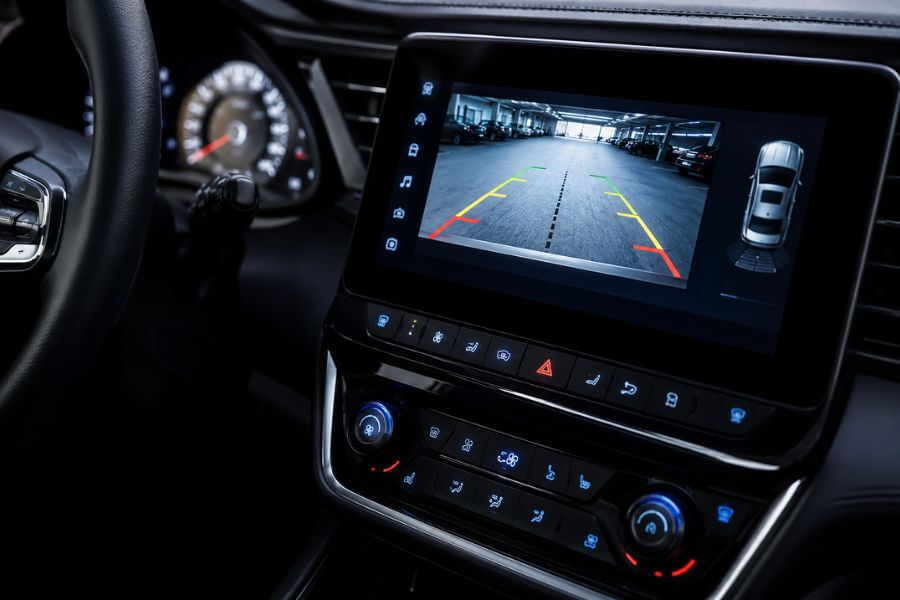
You may think backup cameras only arrived after modern touchscreens became common, but automakers were experimenting with them back in the 1950s.
One of the earliest examples appeared in the 1956 Buick Centurion concept car. Instead of a traditional rearview mirror, the car used a camera mounted at the back that displayed an image on a screen inside the vehicle.
At the time, the technology was incredibly expensive and not practical for regular production cars. Camera quality was poor compared to modern systems, and screens were bulky.
Still, the idea was surprisingly advanced. Designers already understood that visibility behind large vehicles could become a serious safety issue.
Today, backup cameras are standard equipment in many countries and are required in all new passenger vehicles sold in the United States.
4. GPS Navigation Was Around Before Smartphones 🧭
Modern drivers often rely on smartphone apps for navigation, but car-based GPS systems existed long before phones became smart.
During the 1980s, several companies began experimenting with digital navigation systems. Early versions appeared in luxury vehicles in Japan and later spread to Europe and America.
Some early systems even used maps stored on cassette tapes or discs. The technology was slow and expensive, but it gave drivers turn-by-turn directions years before mobile apps existed.
By the 1990s, luxury brands were offering factory-installed navigation systems that amazed drivers at the time.
Today, navigation is so normal that people rarely think about how futuristic it once seemed. Yet the dream of digital guidance on the road has existed for decades.
5. Heated Seats Arrived in the 1960s 🔥
Heated seats feel like a modern luxury feature, especially in premium SUVs and electric cars. Surprisingly, heated seats appeared as early as the 1960s.
Cadillac helped popularize the feature in luxury vehicles, offering drivers extra comfort during cold weather. The systems were simple compared to modern versions, but they still delivered warm seating through built-in heating elements.
At the time, heated seats were considered an elite feature for high-end buyers. Most people never expected something so comfortable to become mainstream.
Today, heated seats appear in everything from pickup trucks to affordable compact cars. Some vehicles even offer heated rear seats and steering wheels.
The idea may sound modern, but drivers have been enjoying warm seats for generations.
6. Hybrid Cars Were Invented in the Early 1900s 🌱
Hybrid vehicles became famous after cars like the Toyota Prius appeared in the late 1990s. However, hybrid technology actually dates back to the early 1900s.
One of the earliest hybrid designs came from Ferdinand Porsche. His system combined an electric motor with a gasoline engine to improve efficiency and performance.
At the time, engineers already understood the benefits of combining power sources. The problem was complexity and cost. Early hybrids were difficult to build and maintain using the technology available at the time.
For decades, the idea stayed mostly experimental. But once fuel economy became a major concern again, hybrids returned to the spotlight.
Today, hybrid systems are common in family sedans, SUVs, and even supercars.
7. Keyless Entry Started in the 1980s 🔑
Many people associate keyless entry with modern luxury vehicles, but the technology began appearing in cars during the 1980s.
Early systems allowed drivers to unlock doors remotely using a wireless key fob. At the time, this felt incredibly advanced because most cars still relied completely on traditional metal keys.
Luxury brands especially loved the convenience factor. Drivers no longer needed to fumble with keys in dark parking lots or bad weather.
Over time, keyless systems evolved into push-button start technology and smart keys that can stay in your pocket.
Today, some vehicles can even unlock automatically when you walk nearby, but the roots of that convenience go back decades.
8. Anti-Lock Brakes Have Been Around Since the Early 1900s 🛑
Anti-lock braking systems, often called ABS, feel like modern safety technology. In reality, engineers were working on similar ideas nearly 100 years ago.
Early versions of anti-lock braking technology appeared in aircraft before making their way into automobiles. By the 1960s and 1970s, improved electronic systems started appearing in high-end vehicles.
The goal was simple but revolutionary. Prevent the wheels from locking during hard braking so drivers can maintain steering control.
At first, ABS was expensive and mostly limited to luxury cars. Many drivers were unfamiliar with the pulsing brake feel and did not trust the system immediately.
Today, ABS is considered one of the most important safety features ever developed and is standard in modern vehicles worldwide.
9. Touchscreen Car Controls Existed in the 1980s 📱
Touchscreen controls may seem tied to modern electric vehicles, but some automakers experimented with them surprisingly early.
The 1986 Buick Riviera featured one of the first touchscreen systems used in a production car. The screen controlled climate settings, radio functions, and trip information.
Although it looked futuristic, the technology had major limitations. The screen responded slowly, fingerprints became annoying, and drivers often found the menus confusing.
Still, the idea was incredibly forward-thinking for the 1980s. Automakers already imagined digital dashboards replacing traditional buttons decades before smartphones existed.
Modern touchscreens are faster and more advanced, but the concept itself is far older than many people realize.
10. Self-Parking Technology Began in the 1990s 🤖
Self-parking systems may sound like cutting-edge technology from the last few years, but automakers began experimenting with parking assistance in the 1990s.
Early systems used sensors to help drivers measure parking spaces and guide steering inputs. Some luxury cars could partially steer themselves into tight spots long before full self-driving discussions became common.
At first, many drivers treated the technology like a gimmick. Some did not trust computers handling steering tasks at all.
As sensors and software improved, self-parking became smoother and more reliable. Modern systems can now control steering, acceleration, braking, and gear changes automatically during parking.
The feature still feels futuristic today, yet its origins go back more than 25 years.
Conclusion 🚘
The car industry has always been more innovative than many people realize. Features that seem brand new today often began as experimental ideas decades earlier. Engineers and designers were dreaming about safer, smarter, and more comfortable vehicles long before modern technology made those dreams practical.
From electric cars in the 1800s to touchscreens in the 1980s, many innovations simply arrived before the world was ready for them. Some disappeared for years because the technology could not support them properly at the time. Others stayed limited to luxury models until costs finally dropped.
The next time you use cruise control, heated seats, or a backup camera, remember that these features are not as new as they appear. In many ways, the future of driving has been in development for generations.
Frequently Asked Questions ❓
Which car feature surprised people the most when it first appeared?
Backup cameras and touchscreen controls shocked many drivers because they looked extremely futuristic during their early years. Most people were not ready to trust screens inside cars decades ago.
Why did some early car technologies disappear for years?
Many features were simply too expensive or unreliable when first introduced. Technology, manufacturing, and consumer demand needed time to catch up before those ideas could succeed widely.
Were old versions of these features as good as modern ones?
Not usually. Early systems often worked slowly, lacked reliability, or were limited in functionality. Modern electronics and software have made these features much more practical and user-friendly.
What luxury brands introduced the earliest innovations?
Luxury brands like Cadillac, Mercedes-Benz, and Buick often tested advanced ideas first because their customers were more willing to pay for experimental technology.
Could modern cars exist without these early inventions?
Probably not. Many of today’s safety, comfort, and convenience systems were built on ideas first tested decades ago. Those early experiments helped shape the direction of the entire automotive industry.