Table of Contents
Few movie moments get your heart racing like a great car chase. The screeching tires, narrow escapes, fast gear changes, and close calls can make you feel like you are sitting in the passenger seat. While modern movies often depend heavily on CGI, many of the greatest car chases in film history were created with real stunt driving, real crashes, and highly skilled drivers risking everything on actual streets and tracks.
These scenes became legendary because they felt real. You could see the weight of the cars, the danger of every turn, and the skill behind every drift. In many cases, stunt teams spent weeks planning a single sequence just to make it look believable without relying on computer effects.
If you love action movies, classic cars, or incredible driving skills, these are the car chases you should never miss.
Quick Summary Table 🚗
| Rank | Movie | Year | Famous Vehicle | Why It Stands Out |
|---|---|---|---|---|
| 1 | The French Connection | 1971 | Pontiac LeMans | Raw realism and dangerous city driving |
| 2 | Bullitt | 1968 | Ford Mustang GT Fastback | The chase that changed movie action forever |
| 3 | Mad Max: Fury Road | 2015 | War Rig | Massive practical stunts in the desert |
| 4 | Ronin | 1998 | BMW and Peugeot cars | Brutal close-quarters driving |
| 5 | The Bourne Supremacy | 2004 | Moscow taxi chase | Brutal close quarters driving |
| 6 | Gone in 60 Seconds | 1974 | Yellow Mustang | One of the longest chases ever filmed |
| 7 | Baby Driver | 2017 | Subaru WRX | Precision driving synced with music |
| 8 | The Blues Brothers | 1980 | Dodge Monaco | Huge practical crashes and chaos |
| 9 | Death Proof | 2007 | Dodge Challenger | Real stunt performers hanging from moving cars |
| 10 | Fast Five | 2011 | Dodge Chargers | Heavy practical stunt work with giant vault scenes |
How We Ranked These Car Chases 🏁
We looked at several important factors to decide which movie chases deserved a spot on this list:
- Real stunt driving instead of heavy CGI
- Difficulty of the driving sequences
- Risk level for stunt performers
- Influence on future action movies
- Camera work and realism
- Audience excitement and lasting popularity
- Vehicle control and stunt precision
- Behind-the-scenes innovation
- Overall entertainment value
- Cultural impact over time
1. Bullitt (1968) 🚓
When people talk about movie car chases, this is usually the first one mentioned. The famous chase in Bullitt completely changed how Hollywood filmed action scenes. Before this movie, car chases often looked fake and slow. Bullitt made audiences feel every bump, slide, and gear shift.
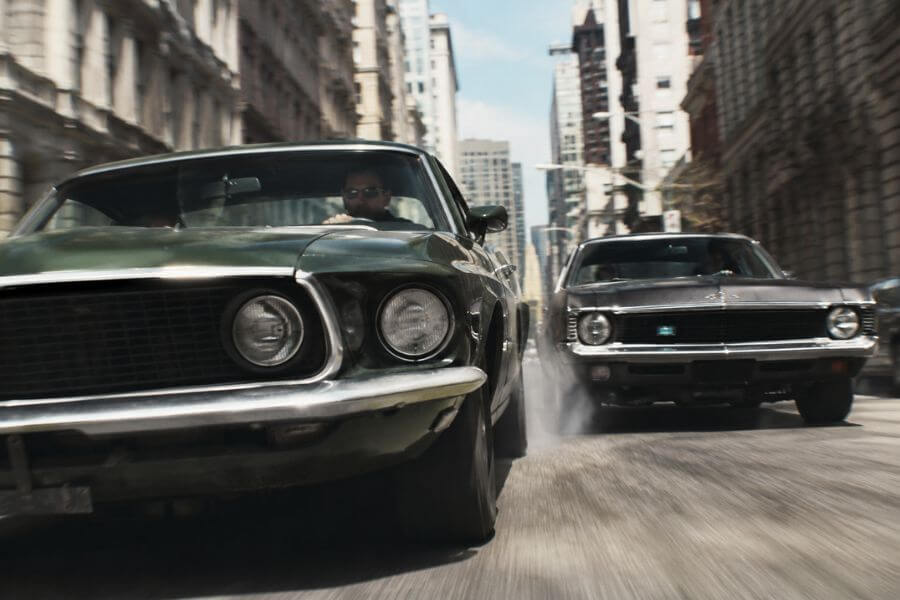
The chase through the steep streets of San Francisco featured a green Ford Mustang GT Fastback driven by Steve McQueen’s character while a black Dodge Charger hunted him through traffic. What made the sequence so special was the realism. The production used actual city streets, practical camera setups, and highly skilled stunt drivers pushing the cars hard.
Steve McQueen was known for loving racing and performing some driving himself. The stunt team drove at dangerous speeds across hilly roads while keeping control of heavy muscle cars without modern safety systems.
The sound design also helped the chase feel authentic. Instead of dramatic music, audiences heard roaring engines, screeching tires, and suspension impacts. That simple choice made the scene feel raw and believable.
Even decades later, many directors still study this chase when planning realistic action scenes.
2. The French Connection (1971) 🚦
Very few movie scenes feel as dangerous and uncontrolled as the chase in The French Connection. The film followed detective Popeye Doyle as he chased a train through crowded New York streets at terrifying speed.
The sequence became legendary because much of it was filmed without full street closures. Drivers, pedestrians, and traffic reactions often looked real because many people did not realize filming was happening nearby.
The stunt team drove a Pontiac LeMans aggressively through intersections, around corners, and under elevated train tracks while cameras captured the chaos from inside and outside the car. The close calls gave the scene a documentary-like feeling that modern CGI rarely recreates.
What truly separates this chase from others is its unpredictability. Cars miss each other by inches, the suspension shakes violently, and the city feels alive and dangerous.
The chase won praise for showing how messy and risky real driving can become under pressure.
3. Mad Max: Fury Road (2015) 🔥
Even though Mad Max: Fury Road came out in the modern CGI era, director George Miller insisted on using real stunt work whenever possible. The result was one of the most visually insane action movies ever created.
Most of the movie’s car chases happened in real desert environments using actual vehicles built specifically for the film. Massive trucks, spiked cars, motorcycles, and custom war machines crashed, flipped, and exploded for real.
Professional stunt drivers trained for months to control these unusual vehicles on rough terrain at high speed. The production also used pole swinging performers who balanced high above moving vehicles while the chase continued underneath them.
Because so much of the action was practical, every crash carried real physical weight. Dust clouds, tire movement, and impacts felt natural rather than digitally created.
The movie proved that practical stunt driving could still outperform computer-generated action when done correctly.
4. Ronin (1998) 🚘
Ronin delivered some of the most technically impressive driving scenes ever filmed. The movie focused heavily on realism, and that decision helped create unforgettable car chases through crowded European streets.
The production used experienced professional drivers who pushed BMWs, Audis, Peugeots, and Mercedes cars through tight corners at dangerous speeds. The chase scenes were filmed with low camera angles that made the cars appear even faster.
One reason fans love Ronin is that the cars behave realistically. They slide, bounce, lose traction, and react naturally to road conditions. Nothing feels exaggerated or fake.
The tunnel sequences became especially famous because of the speed and precision involved. Drivers raced against traffic while narrowly avoiding crashes in confined spaces.
Instead of relying on flashy edits, the movie allowed audiences to clearly follow the action, making every movement feel intense and believable.
5. The Bourne Supremacy (2004) 🚖
The Moscow taxi chase in The Bourne Supremacy showed that smaller cars could create just as much excitement as expensive sports cars.
Jason Bourne escapes assassins using a damaged taxi while weaving through traffic, smashing into obstacles, and spinning across icy roads. The chase feels brutal because the car itself looks barely functional.
The stunt drivers performed aggressive maneuvers in tight locations while maintaining control during collisions and sharp turns. The sequence relied heavily on practical driving rather than digital tricks.
The camera style also increased tension. Quick movements and close shots placed viewers directly inside the chaos. You could almost feel every impact and slide.
What makes this chase memorable is how desperate it feels. Bourne is not showing off. He is surviving, and the realistic stunt driving helps sell every second of danger.
6. Gone in 60 Seconds (1974) 🛞
Not the remake, but the original 1974 version deserves recognition for delivering one of the longest and wildest car chases ever filmed.
The movie featured a yellow Ford Mustang named Eleanor and included a chase lasting more than 40 minutes. That alone makes it unique in movie history.
Director H.B. Halicki personally performed many of the dangerous stunts himself. Crashes, jumps, and collisions were often done practically with very little protection compared to modern productions.
One famous jump damaged the stunt driver’s spine during filming, showing how physically demanding these sequences truly were.
The raw nature of the movie gives it a gritty charm. Nothing feels overly polished. Instead, audiences see real cars taking real punishment across highways, neighborhoods, and industrial areas.
For stunt enthusiasts, this film remains a legendary achievement.
7. Baby Driver (2017) 🎵
Baby Driver combined music and stunt driving in a way few movies had attempted before. Nearly every drift, turn, and handbrake move matched the soundtrack playing during the scene.
The opening chase became instantly iconic thanks to the incredible coordination between stunt drivers, camera operators, and timing experts.
Much of the driving was performed practically using real cars and carefully planned routes through Atlanta streets. The Subaru WRX featured in the opening sequence became especially popular among car fans afterward.
Instead of using shaky editing to fake excitement, the movie relied on actual driving skill. Long takes allowed viewers to appreciate the precision behind every move.
The result felt stylish but still believable. The car movement had real weight and momentum that CGI often struggles to recreate.
8. The Blues Brothers (1980) 🚔
Sometimes the best car chases are pure chaos. The Blues Brothers delivered destruction on an unbelievable scale while still relying heavily on practical stunt work.
The movie became famous for destroying huge numbers of police cars during extended pursuit scenes. Stunt drivers launched vehicles through malls, streets, bridges, and crowded roadways while maintaining comedic timing.
One reason the movie still impresses audiences is the commitment to practical crashes. Cars flipped, smashed, and piled into each other for real, creating visual energy that feels authentic even today.
The Dodge Monaco police car became a cultural icon thanks to these scenes.
While the chase had a comedic tone, the driving skill behind it was extremely serious and carefully coordinated.
9. Death Proof (2007) 🏎️
Quentin Tarantino’s Death Proof celebrated old-school stunt work by putting real performers in genuinely dangerous situations.
One sequence featured stuntwoman Zoë Bell hanging onto the hood of a moving Dodge Challenger while another car slammed into it repeatedly. The stunt was performed practically with minimal visual effects assistance.
The film focused heavily on raw driving, tire movement, and physical impacts instead of unrealistic superhero-style action.
Because the performers were truly attached to moving vehicles, audiences could sense the danger immediately. Every bump and turn looked painful and unpredictable.
The movie also paid tribute to classic car chase films from earlier decades while proving practical stunts could still shock modern audiences.
10. Fast Five (2011) 💨
The Fast & Furious franchise eventually became known for impossible action scenes, but Fast Five balanced spectacle with impressive practical stunt driving.
The massive vault chase through city streets required real cars pulling heavy objects at speed while stunt teams coordinated crashes and destruction around them.
Multiple Dodge Chargers and custom stunt vehicles were built specifically for the demanding scenes. Drivers performed sharp turns, drifting maneuvers, and close-proximity driving while dragging giant vault props behind them.
Even though CGI enhanced some moments, much of the physical driving and vehicle destruction happened practically.
The chase succeeded because audiences could still feel the weight and momentum of the vehicles involved. The action looked large because many parts of it were truly happening in real environments.
Conclusion 🎥
Great car chases are more than fast driving. They are a combination of stunt skill, vehicle control, camera work, timing, and courage. The movies on this list earned legendary status because they trusted real stunt performers to create authentic action instead of relying entirely on computers.
When you watch these scenes, you can feel the difference immediately. The cars move naturally, the crashes have real force, and the danger feels believable. That realism keeps audiences coming back year after year.
Even as technology improves, practical stunt driving continues to hold a special place in movie history. Nothing fully replaces the excitement of watching skilled drivers push real cars to their limits on screen.
Frequently Asked Questions ❓
Why do practical car chases often look better than CGI?
Practical car chases usually feel more realistic because real vehicles have natural movement, weight, and physical reactions. Audiences can subconsciously notice when action scenes rely too heavily on computer effects.
Which actor performed the most real driving in movie history?
Steve McQueen is often considered one of the most involved actors when it comes to real driving. He had serious racing experience and performed parts of his own driving scenes in several movies.
Are movie stunt drivers professional racers?
Some are professional racers, but many are specially trained stunt drivers. They learn advanced precision driving techniques designed for filmmaking rather than competitive racing.
What is the longest car chase ever filmed for a movie?
The original Gone in 60 Seconds from 1974 is famous for having one of the longest car chases ever, lasting over 40 minutes.
Do modern movies still use real stunt driving?
Yes, many filmmakers still use practical driving whenever possible. Movies like Mad Max: Fury Road and parts of the John Wick series continue to rely heavily on real stunt performers and practical vehicle action.