Table of Contents
Your glovebox probably holds old receipts, expired napkins, and maybe a random pen that no longer works. But this small compartment can actually become one of the most useful spaces in your car if you stock it the right way.
The truth is that many drivers are unprepared for small emergencies, unexpected delays, or everyday problems on the road. A few simple items can save you time, stress, money, and even keep you safer during a breakdown or accident.
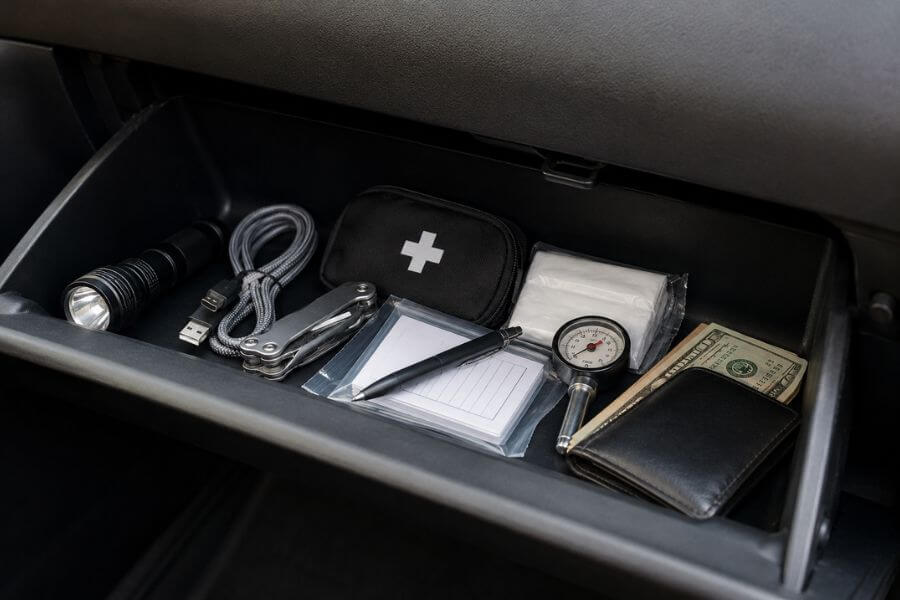
In this guide, you’ll discover 10 items you should always keep in your glovebox but probably don’t. These are practical, affordable, and easy to store without taking up much space.
Quick Summary Table 📋
| Item | Why You Need It | Helps In |
|---|---|---|
| Insurance and registration copies | Quick access during emergencies | Traffic stops and accidents |
| Flashlight | Better visibility at night | Breakdowns and dark areas |
| Phone charging cable | Keeps your phone powered | Emergencies and navigation |
| Tire pressure gauge | Helps maintain safe tires | Fuel savings and safety |
| Emergency contact card | Important if your phone dies | Medical or accident situations |
| Wet wipes or tissues | Easy cleanup on the road | Spills and messes |
| Multi tool | Handles small problems quickly | Minor repairs |
| Notepad and pen | Useful for exchanging information | Accidents and reminders |
| Small first aid kit | Helps treat minor injuries | Cuts and scrapes |
| Spare cash | Useful when cards fail | Tolls and emergencies |
How We Ranked These Items 🧠
We selected these glovebox essentials based on several practical factors that matter to everyday drivers:
- Ease of storage in a small glovebox
- Affordability for most people
- Usefulness during emergencies
- Frequency of real-world situations
- Ability to save time or reduce stress
- Safety benefits while driving
- Long-term practicality
- Everyday convenience
1. Copies of Your Insurance and Registration 📄
One of the most important things your glovebox should contain is updated copies of your insurance and vehicle registration.
Many people rely only on digital versions stored on their phones. That sounds convenient until your battery dies, your screen breaks, or you lose internet access. Having printed copies gives you peace of mind during traffic stops, accidents, or roadside emergencies.
Store them in a waterproof envelope or plastic sleeve to protect them from spills and moisture. It also helps keep the papers neat and easy to find when you need them quickly.
You should also check these documents every few months to make sure they are current and not expired.
2. A Small Flashlight 🔦
You never realize how valuable a flashlight is until you need one at night.
Whether you are checking under the hood, looking for something you dropped, or changing a tire on a dark road, a flashlight can make the situation much safer and less stressful.
A compact LED flashlight works best because it lasts longer and takes up very little room. Some drivers even prefer rechargeable versions that can charge through USB.
Avoid using your phone flashlight as your only option. Your phone battery may already be low during an emergency, and you may need your phone for calls or navigation.
3. A Reliable Phone Charging Cable 🔌
Your phone is one of the most important tools you carry while driving. It handles navigation, emergency calls, traffic updates, and roadside assistance.
But many people forget to keep an extra charging cable in the car until it is too late.
A dedicated glovebox charging cable means you always have a backup ready. Choose a durable cable that works with your device and consider adding a small car charger adapter if your vehicle does not already have USB ports.
This simple item can make a huge difference during long trips or unexpected delays.
4. A Tire Pressure Gauge 🚘
Low tire pressure affects more than just your tires. It can reduce fuel economy, hurt handling, and increase the risk of a blowout.
A small tire pressure gauge is cheap, easy to use, and small enough to fit almost anywhere inside your glovebox.
Checking your tire pressure once every few weeks helps your car perform better and can even extend the life of your tires. It is especially important during weather changes because temperatures can affect tire pressure quickly.
Digital gauges are easy to read, but classic manual gauges work well too and usually last longer.
5. An Emergency Contact Information Card ❤️
Most people assume emergency responders can simply use their phones if something happens. Unfortunately, locked phones or dead batteries can make that difficult.
A simple emergency contact card can provide critical information during an accident or medical emergency.
Include:
- Your emergency contacts
- Important medical conditions
- Allergies
- Blood type if known
- Current medications
Place the card somewhere easy to find inside the glovebox. It may seem old-fashioned, but it can become extremely valuable when every second counts.
6. Wet Wipes or Travel Tissues 🧻
This may not sound important until you spill coffee on yourself, touch something greasy, or need to clean your hands after checking your engine.
Wet wipes and tissues are some of the most underrated car essentials you can carry.
They help with:
- Food spills
- Dirty hands
- Sneezes and allergies
- Dusty dashboards
- Quick cleanups during road trips
Choose individually wrapped wipes or travel packs that can handle temperature changes inside the car.
7. A Compact Multi Tool 🛠️
A small multi-tool can solve dozens of tiny problems on the road.
You may need scissors, a screwdriver, pliers, or a small blade more often than you think. From tightening loose screws to opening packaging or cutting zip ties, a quality multi-tool becomes surprisingly useful over time.
Look for a compact version that safely folds and fits easily inside your glovebox without adding clutter.
You do not need a giant professional kit. Even a simple multi-tool with a few basic functions can save the day.
8. A Notepad and Pen ✍️
Even in a digital world, a notepad and pen still matter.
After a small accident, you may need to exchange information quickly. You might also want to write down directions, parking details, or maintenance reminders.
Pens are also useful when your phone battery dies or when typing on a screen is inconvenient.
Choose a sturdy pen that works well in hot and cold temperatures because some cheap pens stop working inside parked cars during extreme weather.
9. A Small First Aid Kit 🩹
Minor injuries can happen anytime. A small first aid kit allows you to respond quickly before the situation becomes more serious.
Your kit should include:
- Bandages
- Antiseptic wipes
- Medical tape
- Gauze pads
- Pain relievers
- Gloves
You do not need a huge medical bag. A compact travel-sized kit is usually enough for everyday driving situations.
Check the kit occasionally and replace expired items when needed.
10. Spare Cash 💵
Many people rely completely on digital payments today, but cash still matters in certain situations.
Parking meters, toll booths, small shops, or emergencies may require physical money. Card systems can fail, and phone payments do not always work everywhere.
Keeping a small amount of emergency cash hidden safely in your glovebox can help when you least expect it.
You do not need hundreds of dollars. Even a small amount can be useful during unexpected situations.
Conclusion 🌟
Your glovebox should do more than store random clutter. With a few smart additions, it can become a practical emergency kit that helps you handle everyday problems and stressful situations with confidence.
Most of these items are inexpensive, easy to store, and incredibly useful when you actually need them. The best part is that once you stock your glovebox properly, you rarely have to think about it again.
A little preparation today can save you major frustration tomorrow.
Frequently Asked Questions ❓
How often should you clean out your glovebox?
You should clean and reorganize your glovebox every few months. Remove expired papers, old receipts, and unused items so you can quickly find what you actually need during an emergency.
Can extreme temperatures damage glovebox items?
Yes. Heat and cold can damage electronics, batteries, medications, wipes, and pens. Choose items designed for travel or replace sensitive products regularly.
Should you keep spare keys in your glovebox?
It is generally not recommended. If someone breaks into your car and finds the spare key, they could easily steal the vehicle.
What should you avoid storing in a glovebox?
Avoid storing valuables, sensitive personal information, medications that are temperature sensitive, or anything that could melt, leak, or explode in extreme heat.
Is it better to keep emergency items in the trunk instead?
Larger emergency supplies like jumper cables and roadside kits are better in the trunk, but smaller high-use items should stay in the glovebox where you can reach them quickly.