Table of Contents
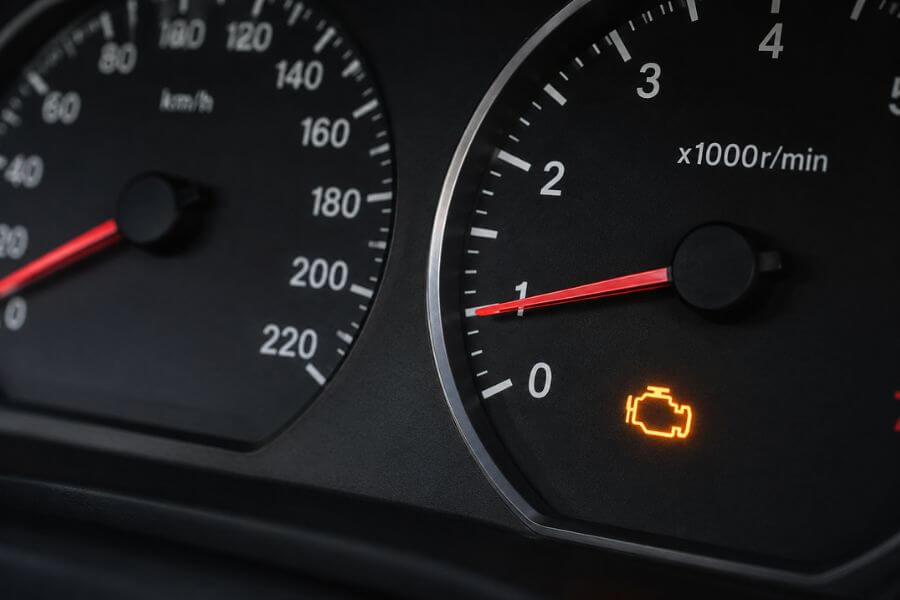
If your check engine light suddenly appears on your dashboard, it can be frustrating and even a little stressful. You may wonder if your car has a serious problem or if it’s something simple that can be fixed quickly.
The truth is that the check engine light can turn on for many different reasons. Some issues are minor and inexpensive to repair, while others can lead to poor performance, reduced fuel economy, or costly damage if ignored.
Understanding the most common causes can help you make better decisions and avoid unnecessary repairs. In this guide, you’ll learn the 10 most common reasons your check engine light is on, what symptoms to watch for, and why addressing the problem early can save you money.
Quick Summary Table 📋
| Rank | Reason | Severity | Typical Repair Cost |
|---|---|---|---|
| 1 | Loose or Damaged Gas Cap | Low | Very Low |
| 2 | Faulty Oxygen Sensor | Medium | Moderate |
| 3 | Bad Catalytic Converter | High | Expensive |
| 4 | Worn Spark Plugs or Ignition Coils | Medium | Moderate |
| 5 | Mass Air Flow Sensor Failure | Medium | Moderate |
| 6 | Faulty Battery or Charging System | Medium | Moderate |
| 7 | Vacuum Leak | Medium | Low to Moderate |
| 8 | EGR Valve Problems | Medium | Moderate |
| 9 | Faulty Thermostat or Cooling System Issues | Medium | Moderate |
| 10 | Transmission Related Problems | High | Expensive |
How We Ranked These Reasons 🔍
We ranked these common check engine light causes using the following factors:
- How frequently the issue occurs
- Potential impact on vehicle performance
- Risk of causing additional damage
- Typical repair costs
- Ease of diagnosis
- Safety concerns
- Likelihood of triggering a check engine light
- Importance of immediate attention
1. Loose or Damaged Gas Cap ⛽
One of the most common and easiest-to-fix causes of a check engine light is a loose gas cap.
Your gas cap plays an important role in sealing the fuel system and preventing fuel vapors from escaping. Modern vehicles constantly monitor the fuel system for leaks. If the cap is loose, cracked, or damaged, the vehicle’s computer may detect a pressure loss and turn on the check engine light.
Common signs include:
- Check engine light with no other symptoms
- Fuel smell around the vehicle
- Recently refueled vehicle
Many drivers accidentally leave the gas cap loose after filling up at the gas station. Tightening it properly may solve the issue. However, the light may take several driving cycles to reset.
Replacing a damaged gas cap is usually inexpensive and can prevent unnecessary fuel system warnings.
2. Faulty Oxygen Sensor 🔧
The oxygen sensor measures the amount of oxygen in your vehicle’s exhaust gases. This information helps the engine computer adjust the air-fuel mixture for optimal performance and fuel efficiency.
Over time, oxygen sensors can become contaminated or wear out. When this happens, the engine may not receive accurate information.
Common symptoms include:
- Reduced fuel economy
- Rough engine performance
- Failed emissions tests
- Check engine light
Ignoring a faulty oxygen sensor can lead to higher fuel consumption and increased emissions. In some cases, it may even contribute to catalytic converter damage, which is much more expensive to repair.
Regular maintenance and timely replacement can help keep your vehicle running efficiently.
3. Bad Catalytic Converter 🔥
The catalytic converter is one of the most important components of your vehicle’s emissions system. It converts harmful pollutants into less harmful gases before they exit through the exhaust.
When the catalytic converter fails, your vehicle may experience several noticeable problems.
Signs of a failing catalytic converter include:
- Poor acceleration
- Reduced engine power
- Rotten egg smell from exhaust
- Increased fuel consumption
- Check engine light
Catalytic converter replacement can be expensive because of the valuable materials used inside the unit.
Many catalytic converter failures actually result from other neglected problems, such as faulty oxygen sensors, engine misfires, or fuel system issues. Fixing small problems early can help avoid this costly repair.
4. Worn Spark Plugs or Ignition Coils ⚙️
Spark plugs and ignition coils work together to ignite the air-fuel mixture inside the engine cylinders.
As these components age, they become less effective. When ignition problems occur, the engine may misfire, causing the check engine light to illuminate.
You may notice:
- Rough idling
- Engine shaking
- Reduced acceleration
- Lower fuel efficiency
- Difficulty starting the vehicle
Fortunately, spark plugs are considered routine maintenance items and are usually affordable to replace.
Keeping your ignition system in good condition helps improve performance, fuel economy, and engine reliability.
5. Mass Air Flow Sensor Failure 🌬️
The mass air flow sensor, often called the MAF sensor, measures the amount of air entering the engine.
The engine computer uses this information to determine how much fuel to inject. If the sensor provides incorrect readings, the air-fuel mixture may become too rich or too lean.
Common symptoms include:
- Poor acceleration
- Rough idle
- Engine stalling
- Reduced fuel economy
- Check engine light
Dirty air filters can sometimes contribute to MAF sensor problems. Replacing air filters on schedule can help extend sensor life and improve overall engine performance.
6. Faulty Battery or Charging System 🔋
Many drivers are surprised to learn that battery and charging system issues can trigger a check engine light.
Modern vehicles rely heavily on electronic systems. If the battery, alternator, or charging circuit is not providing proper voltage, the vehicle computer may detect irregularities.
Symptoms may include:
- Slow engine cranking
- Electrical glitches
- Dimming headlights
- Warning lights appearing together
- Difficulty starting the vehicle
Regular battery testing and charging system inspections can help identify problems before they leave you stranded.
7. Vacuum Leak 💨
Your engine relies on a carefully balanced mixture of air and fuel. A vacuum leak allows unmetered air to enter the system, disrupting that balance.
Vacuum leaks can develop due to:
- Cracked hoses
- Broken fittings
- Worn intake gaskets
- Aging rubber components
Common signs include:
- High idle speed
- Rough idling
- Engine hesitation
- Poor fuel economy
- Check engine light
Because vacuum leaks can affect multiple engine systems, proper diagnosis is important for finding the exact source of the problem.
8. EGR Valve Problems 🚦
The Exhaust Gas Recirculation (EGR) valve helps reduce harmful emissions by sending a portion of exhaust gases back into the engine.
Over time, carbon deposits can build up and interfere with proper operation.
When the EGR valve becomes clogged or fails, you may experience:
- Rough idling
- Reduced performance
- Engine knocking
- Increased emissions
- Check engine light
Cleaning or replacing the EGR valve often restores proper operation and improves overall engine efficiency.
9. Faulty Thermostat or Cooling System Issues 🌡️
Your vehicle’s thermostat regulates engine temperature. If it becomes stuck open or closed, the engine may not operate within its ideal temperature range.
Modern vehicles closely monitor engine temperature. Any unusual readings may trigger the check engine light.
Symptoms can include:
- Engine overheating
- Poor heater performance
- Fluctuating temperature gauge
- Reduced fuel economy
- Check engine light
Addressing cooling system issues quickly helps prevent serious engine damage and costly repairs.
10. Transmission Related Problems ⚠️
Some vehicles use the check engine light to alert drivers about transmission issues.
Modern transmissions rely on electronic sensors, solenoids, and control modules. If one of these components malfunctions, the engine computer may store a fault code and activate the warning light.
Possible symptoms include:
- Delayed shifting
- Hard shifting
- Transmission slipping
- Reduced acceleration
- Transmission warning messages
Transmission repairs can become expensive if problems are ignored. Early diagnosis often helps prevent major damage and lowers repair costs.
Conclusion 🏁
A check engine light does not always mean your vehicle is facing a major mechanical failure, but it should never be ignored. Sometimes the cause is as simple as a loose gas cap, while other situations may involve critical engine, emissions, or transmission components.
The best approach is to have the vehicle diagnosed as soon as possible. Catching problems early often leads to lower repair costs, better fuel economy, improved reliability, and a longer vehicle lifespan.
By understanding these common causes, you can respond quickly when the warning light appears and keep your vehicle running smoothly for years to come.
Frequently Asked Questions ❓
Can the check engine light turn off by itself?
Yes. If the issue is temporary and the vehicle no longer detects the fault, the light may eventually turn off after several driving cycles. However, the stored trouble code may still remain in the system.
Does cold weather cause a check engine light?
Cold weather can contribute to certain issues, such as weak batteries, sensor malfunctions, or fuel system problems that may trigger the check engine light.
Is it safe to drive with a check engine light on?
If the light is steady and the vehicle is operating normally, you can usually drive a short distance to get it inspected. If the light is flashing, you should stop driving and seek professional assistance immediately.
How long does it take to diagnose a check engine light?
Basic diagnostics often take less than an hour. More complex problems may require additional testing to identify the root cause accurately.
Will disconnecting the battery reset the check engine light?
Disconnecting the battery may temporarily clear some codes, but if the underlying problem still exists, the light will usually return once the vehicle’s computer detects the fault again.